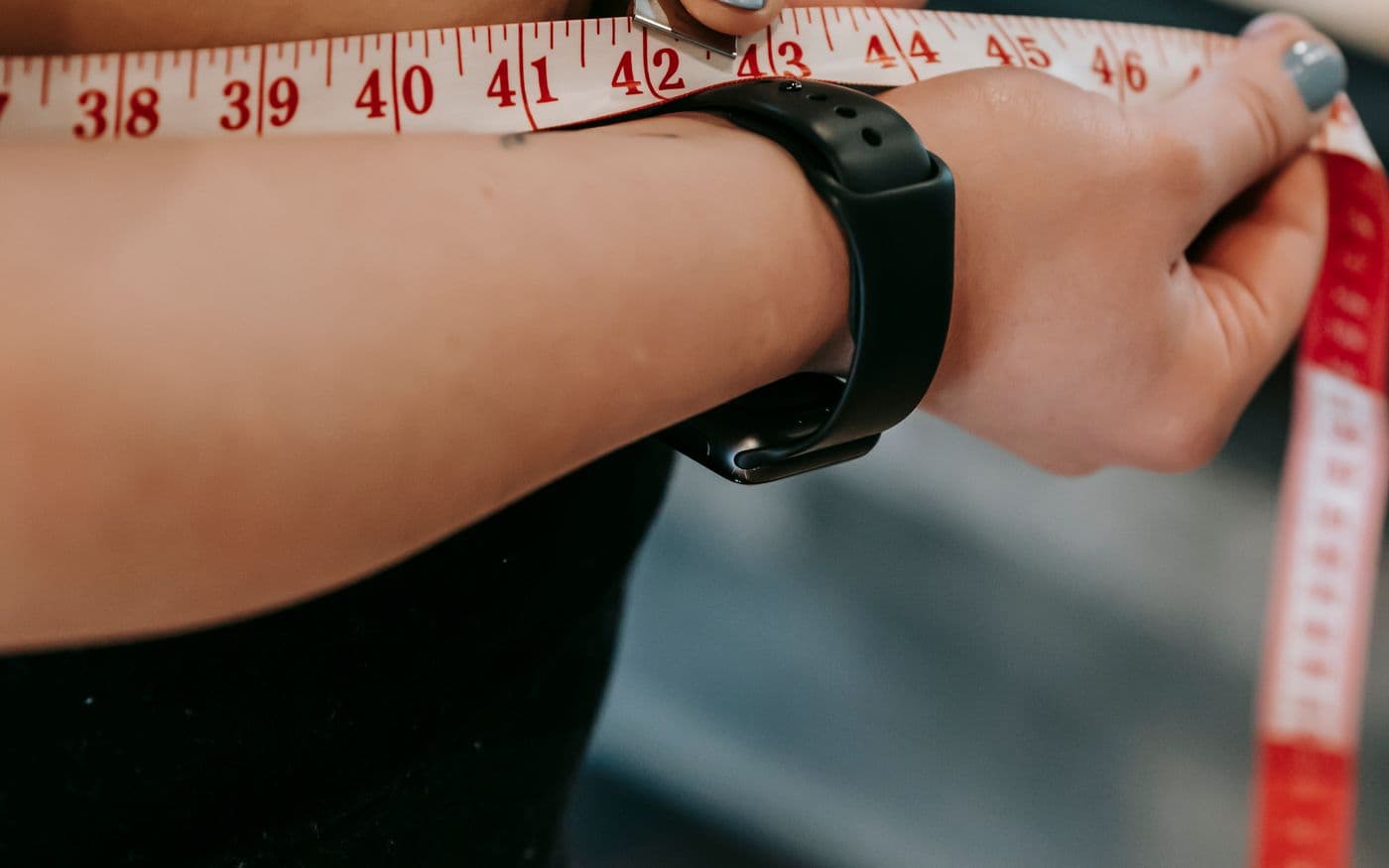
Every nutrition consultation begins with a number: the daily energy requirement. An online calculator spits it out in two seconds, an app supplies it complete with a macro suggestion. Only rarely does anyone ask where this number actually comes from – and how reliable it is. The answer is less comfortable than many expect: energy requirement can be measured, but practically never in everyday life, and it can be calculated, but never exactly. This article shows what the energy requirement is made up of, which laboratory procedures actually capture it, which formulas are used in practice and how large their deviations are.
The three components of the energy requirement
The energy requirement states how many calories the body needs in order to do its daily work. It is made up of three parts:
- Basal metabolic rate: around 60 per cent of the daily energy requirement
- Diet-induced thermogenesis: on average around 8 per cent
- Activity energy expenditure: the remaining 30 to 35 per cent
This breakdown explains why the big adjusting screw does not sit where most people suspect it does. The largest block, the basal metabolic rate, runs without any input from you. The block you can influence directly is the smaller one.
Basal metabolic rate
The basal metabolic rate covers all the energy needed to maintain bodily processes – the work of the heart muscle, the basal tone of the musculature, active transport across the cell membrane. It is what the body consumes when it does absolutely nothing. That is exactly how it is determined: the test subjects lie down in a room heated to 23 to 25 degrees, the last intake of food must be more than twelve hours ago, measurement takes place in the early morning, and the result is extrapolated to 24 hours.
Alongside this there is the concept of resting energy expenditure (REE). It is comparable to the basal metabolic rate, but is determined under less standardised conditions. Anyone comparing values from different sources should therefore first check which of the two quantities is meant.
Diet-induced thermogenesis
Breaking down, absorbing and storing food costs energy in itself. How much depends on the composition: carbohydrates need considerably less, at around 5 per cent, than proteins with 25 to 30 per cent. Because a mixed diet is usually eaten across the day, the average effect of diet-induced thermogenesis is put at about 8 per cent.
Activity energy expenditure
Activity energy expenditure is where daily energy consumption can be influenced most strongly. It is made up of sporting activity and of everyday activity not caused by sport – the latter is known as NEAT, non exercise activity thermogenesis. What is meant is everything that happens between training sessions: stairs, journeys, housework, standing instead of sitting. Just how much weight this share carries is also shown by the article 10,000 steps a day.
Activity energy expenditure is captured via the PAL value. It indicates the value by which the basal metabolic rate has to be multiplied in order to obtain the total energy requirement, and expresses the activity level for the whole day. Alternatively, individual activities can be captured via the MET score: every activity is noted with its duration and MET value, and from this an average value for 24 hours is produced. However, calculation via the MET score is considerably more laborious and delivers more or less similar results. Since both are only an estimate in any case, the PAL value is entirely sufficient in practice.
What determines the basal metabolic rate
The basal metabolic rate is largely determined by the fat-free body cell mass, which includes muscle mass. Investigations have shown that fat-free mass explains 75 per cent of the differences in basal metabolic rate between different people.
That puts the usual suspects into perspective: weight, sex, age and height all do have an influence on the basal metabolic rate – but chiefly via the differing amount of fat-free mass that results from them. Increasing muscle mass is therefore an effective way of raising the basal metabolic rate. Further factors that can change it are stress, fever, changes in the hormonal balance and certain medicines.
Measuring: the laboratory procedures
Direct calorimetry
All bodily processes end in conversion into heat, which is given off to the environment. Precisely this release of heat can be used to capture the effective energy consumption – that is direct calorimetry. For this, the test subjects spend a longer period in a special room in which electrical temperature sensors measure the heat given off.
Indirect calorimetry
Indirect calorimetry measures energy turnover via the exhaled air. For this the test subjects breathe into a special device or under a hood. The CO2 given off through breathing corresponds to the metabolically produced CO2, and this reveals how much energy the body consumes – because the production of energy in the form of ATP always also generates CO2, which we breathe out. For determining the basal metabolic rate, the strict conditions named above apply: fasted, rested, motionless on a couch. The same procedure can also be used to measure diet-induced thermogenesis; the measurement then takes place after food intake.
Doubly labelled water
With this method, specially labelled water is drunk, and measurement can take place over several days. A subsequent examination of the urine provides information – similar to indirect calorimetry – about how much CO2 is produced. The procedure is used above all in research.
Wristbands with sensors
Wristbands with movement, temperature and electrical skin sensors can determine the activity level. Coupled with anthropometric data such as height and weight, statements about energy consumption can likewise be derived from them. This is the only one of the four methods that actually occurs in the everyday life of most clients.
The balance sheet for practice is sobering and clarifying at the same time: direct and indirect methods are for the most part very costly and labour-intensive and tend to be used within the framework of research. Anyone working in consulting will therefore hardly ever measure their clients' energy requirement, but will calculate it.
Calculating: the formulas and their deviations
The first formulas for calculating the basal metabolic rate appeared at the beginning of the twentieth century. The formula developed by Harris and Benedict was first published in 1919. In the following years it was continually evaluated, deviations were discovered, and over time newer formulas emerged – for instance the WHO standard formula after Schofield from 1985.
The Harris-Benedict formula for men reads: 66.47 + (13.7 × body weight in kg) + (5 × height in cm) – (6.8 × age in years) = basal metabolic rate. For women: 655.1 + (9.6 × body weight in kg) + (1.8 × height in cm) – (4.7 × age in years) = basal metabolic rate.
Further formulas in common use:
- Cunningham (1980): 500 + (22 × fat-free mass in kg) = basal metabolic rate. This formula requires the fat-free mass to be stated – and therefore a prior measurement of body composition.
- Mifflin-St. Jeor (1990): women (9.99 × weight in kg) + (6.25 × height in cm) – (4.92 × age in years) – 161; men the same calculation, but + 5 instead of – 161.
- Owen et al. (1986): women 795 + (7.18 × weight in kg); men 879 + (10.2 × weight in kg).
Now for the part that online calculators rarely supply. A study published by Müller et al. in 2004 found large deviations from the data of the German population in the WHO formula as well. The same investigation showed that the Harris-Benedict formula is of little use particularly for underweight people, because energy turnover is overestimated there. The WHO formula shows large deviations across all age and weight groups. Formulas published more recently also show large differences in the calculation of the basal metabolic rate. It is therefore unclear to what extent calculating the basal metabolic rate with the formulas is worthwhile at all.
What this means for practice
Two usable routes follow from this uncertainty. The first: you draw on several formulas and then set a range or an average value. That makes the spread visible instead of hiding it behind a single decimal figure.
The second route is the simple estimation formula. It assumes that 1 kcal is consumed per hour of rest and per kilogram of body weight. For men that means: body weight in kg × 24 = resting energy expenditure, or basal metabolic rate. In women, because of the lower muscle mass, 0.9 instead of 1 kcal per hour can be used for the calculation: 0.9 × body weight in kg × 24. In both cases the following then applies: basal metabolic rate × the PAL value determined = energy requirement.
Both routes deliver an estimate, not a measurement – and as a consultant you have to be aware of this imprecision and name it in the conversation. The calculated number is a starting value, not a target. What it is worth only becomes apparent over time – from weight, circumferences, performance capacity and well-being over several weeks. Anyone planning a deficit from this starting figure will find the next steps in the article Calculating a calorie deficit: how to lose weight without losing muscle. And because fat-free mass explains 75 per cent of the basal metabolic rate, a proper look at body composition is worth more in any case than the third decimal place of a formula.
Course tip from update Akademie: If you work with athletes, the question of energy requirement quickly becomes more complex – training volume, competition phases and recovery shift activity energy expenditure considerably. The Sporternährungscoach course goes deeper into exactly this calculation and connects it with practical consulting. Which of the two nutrition courses suits you better is clarified by the article Sporternährungscoach or Ernährungscoach.
Frequently asked questions about energy requirement
What is the energy requirement made up of?
Of three parts: the basal metabolic rate with around 60 per cent, diet-induced thermogenesis with on average around 8 per cent and activity energy expenditure with 30 to 35 per cent. Activity energy expenditure covers both sporting activity and everyday activity, which is referred to as NEAT.
How accurate are online calculators for calorie requirement?
They are based on the same formulas that are also used in consulting – and these show considerable deviations. The Harris-Benedict formula overestimates energy turnover particularly in underweight people, the WHO formula shows large deviations across all age and weight groups, and newer formulas also differ strongly. A calculated number is a starting value, not an exact quantity.
Why does building muscle raise the basal metabolic rate?
Because the basal metabolic rate is largely determined by the fat-free body cell mass, which includes the musculature. Investigations show that fat-free mass explains 75 per cent of the differences in basal metabolic rate between different people. Increasing muscle mass is therefore an effective way of raising the basal metabolic rate.
What is the difference between basal metabolic rate and resting energy expenditure?
The basal metabolic rate is determined under strictly standardised conditions: lying down in a room heated to 23 to 25 degrees, more than twelve hours after the last intake of food, in the early morning and extrapolated to 24 hours. Resting energy expenditure is comparable to this, but is measured under less standardised conditions.
Is the MET score worth it compared with the PAL value?
In practice usually not. With the MET score, every activity is recorded with its duration and value and an average for 24 hours is formed from this. That is considerably more laborious than working with the PAL value and delivers more or less similar results. Since both are only an estimate in any case, the PAL value is as a rule sufficient.
Conclusion
Energy requirement can be measured – with direct or indirect calorimetry, with doubly labelled water. It is just that these procedures are so costly and labour-intensive that they remain reserved for research. In consulting it is therefore calculated, and every formula brings a considerable imprecision with it. That is no reason to do without the number: it gives a starting point, and without a starting point nothing can be steered. What matters is how you handle it – as an estimate that you openly name as such, that you secure with a range or with several formulas and that you correct against the actual course over several weeks.