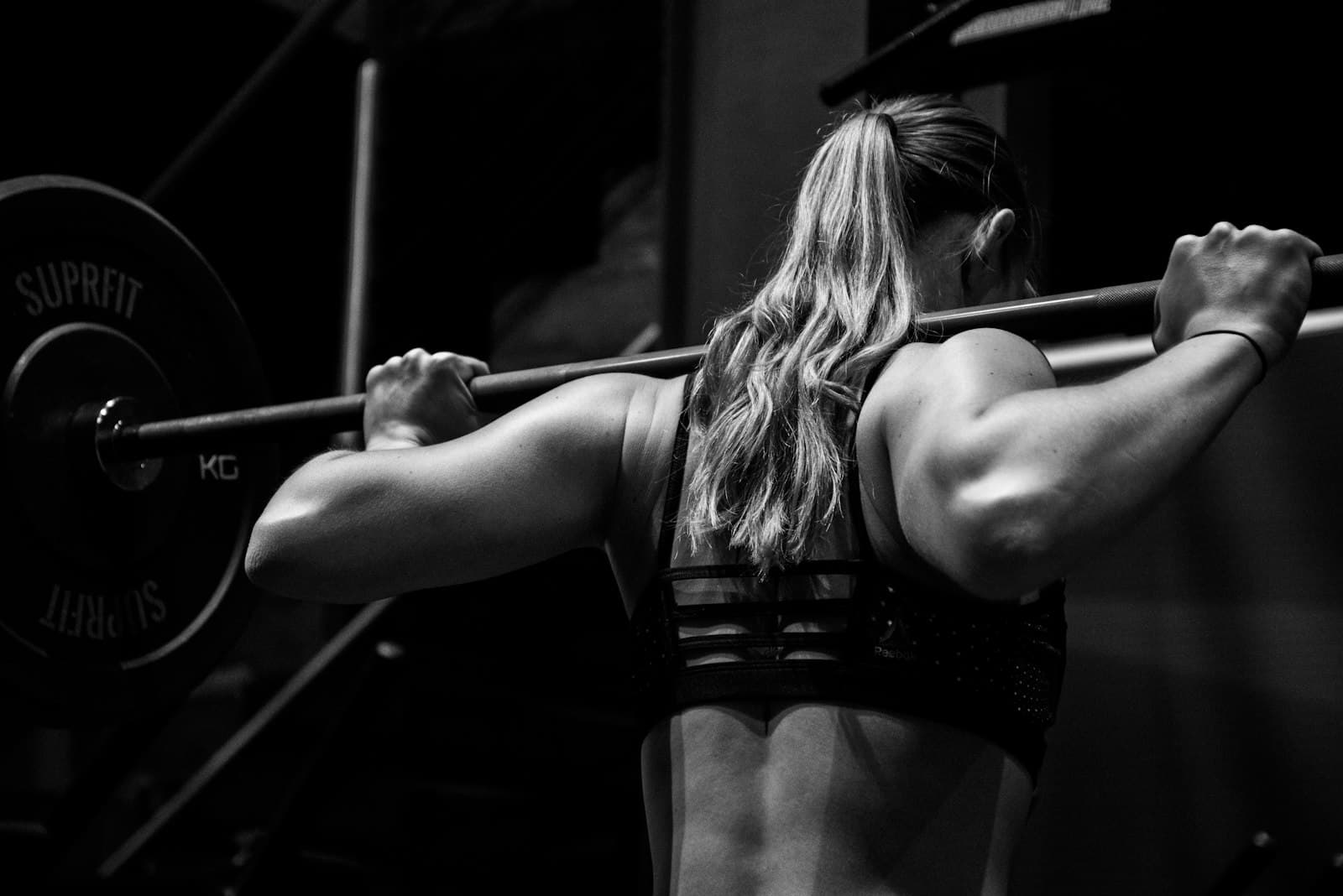
At some point it becomes noticeable: the shopping bag feels heavier, the stairs turn into a stage of a journey, getting up from the sofa needs a little momentum. That is not fate and not a question of willpower, but a biological process with a name – and with an antidote. This article explains what sarcopenia is, why strength training brings the most benefit in the second half of life, what bone density and fall prevention have to do with it, how protein requirements shift and what a realistic start looks like. It is aimed just as much at relatives who would like to persuade someone to take it up.
What sarcopenia is
Sarcopenia is age-related muscle wasting. The update Akademie course lists it alongside two other complaints that behave the same way at their core: muscle training counts there as an important preventive measure for preventing back pain, bone loss (osteoporosis) and age-related muscle wasting (sarcopenia). Three problems, one answer.
There is no fixed starting point – the decline is gradual and begins long before it becomes noticeable. One thing is clear, though: as soon as muscle training is stopped, the muscles adapt to the missing stimuli through atrophy. Muscle training is therefore not an option but a necessity – and that means across a whole lifetime, not across twelve weeks.
Why strength training brings the most benefit now
Strength training acts simultaneously on several systems that decline with age. Among the structural adaptations are the growth of the skeletal musculature in thickness and length, the incorporation of minerals into the bones as well as the strengthening of tendons and ligaments through the formation of connective tissue. Added to this are functional adaptations such as optimised activation of the musculature – precisely the ability that decides whether you can still catch yourself after a misstep.
And one thing counts word for word here: whether young, old, man, woman, trained or untrained – it is never too late to start muscle training and to benefit from its effects. For beginners there is also a consoling principle from training theory: the better trained someone is, the stronger the stimuli they need for further progress; for a beginner, the smallest stimuli are often enough. For more on this, see the article on training in older age.
Bone density and fall prevention
Bone is not a dead scaffold but responds to loading – the incorporation of minerals is expressly one of the training adaptations. What that means for the prevention of osteoporosis is explored in the article on strength training for strong bones.
The second lever is balance. Basic balance and coordination training can simplify everyday activities, reduce falls, shorten hospital stays and prevent accident-related absences. What is decisive is the combination: the risk of falling is reduced twofold by improving the sense of balance together with strengthening the thigh musculature, because both components support a stable reaction to a misstep.
In practice that means: balance exercises in an upright stance, progressed via single-leg execution, then a wobblier surface, then an additional task. Coordination exercises should not last longer than 40 seconds; anyone who can stand cleanly for that long makes the exercise harder instead of longer. More on this in the article on balance training as fall prevention.
Protein: what changes from 65
The utilisation of dietary protein declines with age – protein metabolism changes, which is why an increased requirement applies from the age of 65. The values taught in the course:
- inactive adults: 0.8 g/kg of body weight
- from the age of 65: at least 1.0 g/kg
- with sporting activity: 1.3 to 1.8 g/kg, regardless of the sport
Just as important as the amount is the distribution. Per portion, the amount of protein that leads to the maximum positive protein balance is 0.24 g/kg in younger people and 0.4 g/kg of body mass in older ones. After strength training, the reference is around 20 g of whey protein for young people and around 30 g for older people. Spread across the day the recommendation is: around 20 g of protein every three to four hours, four to six times daily. A gap of about four hours between portions is therefore the reference value – not putting everything into the evening meal is not a detail in older age but the heart of the matter.
More does not help here: excessive amounts of protein have a catabolic effect, because they promote amino acid oxidation and therefore protein breakdown. How to calculate your requirement is shown in the article How much protein per day; what is at stake with pronounced loss of muscle and strength is set out in the article on frailty.
Getting started when you have done nothing for years
The specifications are unspectacular and quite manageable for untrained people:
- one to three times per week, working the whole body each time
- first the large muscle groups – glutes, thighs, back – then the joints in order: hip, knee, lumbar spine, shoulder, elbow, cervical spine, foot, hand
- basic method: 6 to 10 repetitions in a 3-2-3-2 rhythm, which gives a time under tension of 60 to 100 seconds
- end the exercise when anatomically correct movement over the full amplitude is no longer possible
- around 48 hours of rest before the same muscle is heavily loaded again
For the choice of exercises, a ladder ordered by coordinative demand applies: leg extension, leg press, squat, lunge position. At the start there is a case for machines, because the load curve is calculated and the risk of injury with correct execution is practically zero. The increase follows a fixed order: first training frequency, then load density, then volume, and lastly intensity. Why time under tension matters more than the number of repetitions is explained in the article on time under tension and muscular exhaustion.
What changes with age – and what does not
What changes is the dosage, not the principle. Training theory lists «individuality and age-appropriateness» as a training principle in its own right: the trainee's capacity to handle load must always be taken into account, without compromise. There is also a point that gains weight from 50 onwards: the active locomotor system recovers faster than the passive one. With heavy loads you should therefore always pay attention to joints and bones as well before you increase. And: functional adaptations happen quickly, structural ones take longer – so you will feel the first progress earlier than you see it.
Everything else does not change. The stimulus threshold remains a stimulus threshold, the stimulus has to be above the threshold, and the load has to increase from session to session. Existing conditions, medications or previous operations should be medically assessed before you start – that is not a formality but the basis of any serious training planning.
The real goal is independence
In the end this is not about kilograms on the barbell but about whether in twenty years you can do your shopping on your own, get up on your own and live on your own. Muscle training has a positive influence on posture, noticeably improves gait, accelerates healing processes and makes you feel better and more self-assured both physically and mentally. The long-term perspective on this is provided by the article on longevity – and if the way to the gym seems too big a step, the article on movement in everyday life shows where the first step begins.
Course tip from update Akademie: People from midlife onwards have long been the growing customer group in the gym – and they need support that takes their capacity for load, pre-existing conditions and everyday goals seriously. The Gesundheitstrainer with SVBO industry certificate programme at update Akademie conveys exactly this foundation: anatomy and training theory, health evaluation before training planning, managing training through load parameters as well as coordination and balance training as fall prevention.
Frequently asked questions about strength training from 50
Is it too late to start at 60 or 70?
No. It is never too late for muscle training – regardless of age, sex and training status. In untrained people, small stimuli are often enough for measurable adaptations.
How much protein do I need from 65?
At least 1.0 g per kilogram of body weight, and 1.3 to 1.8 g/kg with sporting activity. The distribution is important: around 20 g every three to four hours, four to six times daily.
Do I have to lift heavy for it to work?
What is decisive is not the absolute weight but the time under tension up to momentary muscular failure – 60 to 100 seconds in the basic method – and that frequency or resistance increases from session to session.
Isn't walking enough?
Walking is valuable for the heart and circulation, but as a rule it does not set a sufficient stimulus against the loss of muscle and bone. For sarcopenia and osteoporosis, the preventive measure is muscle training, not endurance alone.
Isn't strength training dangerous in older age?
In muscle training itself, the risk of injury with correct exercise execution is practically zero. Caution applies to the increase: the passive locomotor system recovers more slowly, which is why attention is paid to joints and bones before the load is raised.
Conclusion
In the update Akademie syllabus, sarcopenia, osteoporosis and back pain have the same countermeasure: regular muscle training. From midlife onwards, two things are added that count for less before that – balance training, which together with strong thighs lowers the risk of falling twofold, and a protein intake that from the age of 65 is at least 1.0 g/kg and is spread across the day in portions of around 20 g. The rest stays as it always was: one to three sessions per week, cleanly executed, increased in small steps. It is never too late – and the earlier you start, the less you have to win back later.