Ozempic, Wegovy, Mounjaro: the so-called weight-loss injections have transformed the treatment of excess weight in a very short time – in Switzerland, too. The medications work: studies show weight loss of 15 to 20 percent of body weight. But they have a flip side that gets talked about far too rarely: a substantial share of the weight lost is not fat mass but muscle. This is exactly where strength training comes into play – and with it, a big opportunity for everyone who coaches people through weight loss.
How GLP-1 medications work
Active ingredients such as semaglutide (Ozempic, Wegovy) and tirzepatide (Mounjaro) mimic the gut hormone GLP-1. They slow gastric emptying, act on the satiety center in the brain, and noticeably curb appetite. Anyone using the injection automatically eats less – often considerably less. The weight loss is therefore not caused by the medication itself, but by the large calorie deficit it triggers.
Originally developed for diabetes therapy, these medications are now widely used for weight reduction. With patents expiring and the first copycat products arriving, prices in Switzerland are likely to keep falling – so the number of users is only going to grow.
The problem: up to 40 percent muscle loss
In the approval trials, body composition was measured in a subset of participants. The result: around 25 to 40 percent of the weight lost was fat-free mass – above all, muscle. For a person who loses 20 kilograms, that can mean 5 to 8 kilograms of muscle.
Why is that critical?
- The basal metabolic rate drops. Muscles burn energy even at rest. If you lose a lot of muscle, you need fewer calories afterwards – the stage is set for the yo-yo effect if the medication is discontinued.
- Strength and function are lost. Especially in older people, muscle loss increases the risk of falls, frailty and dependence on care. Just how important muscle and protein are in older age is shown in our article on frailty.
- Body composition remains unfavorable. The goal of weight reduction is less fat – not less muscle. "Skinny fat" is not a health win.
The solution: strength training plus protein
The good news: muscle loss during GLP-1 therapy is not inevitable. Two measures have been proven to counteract it – and both belong in every medically supervised weight-loss therapy.
1. Strength training, two to three times per week
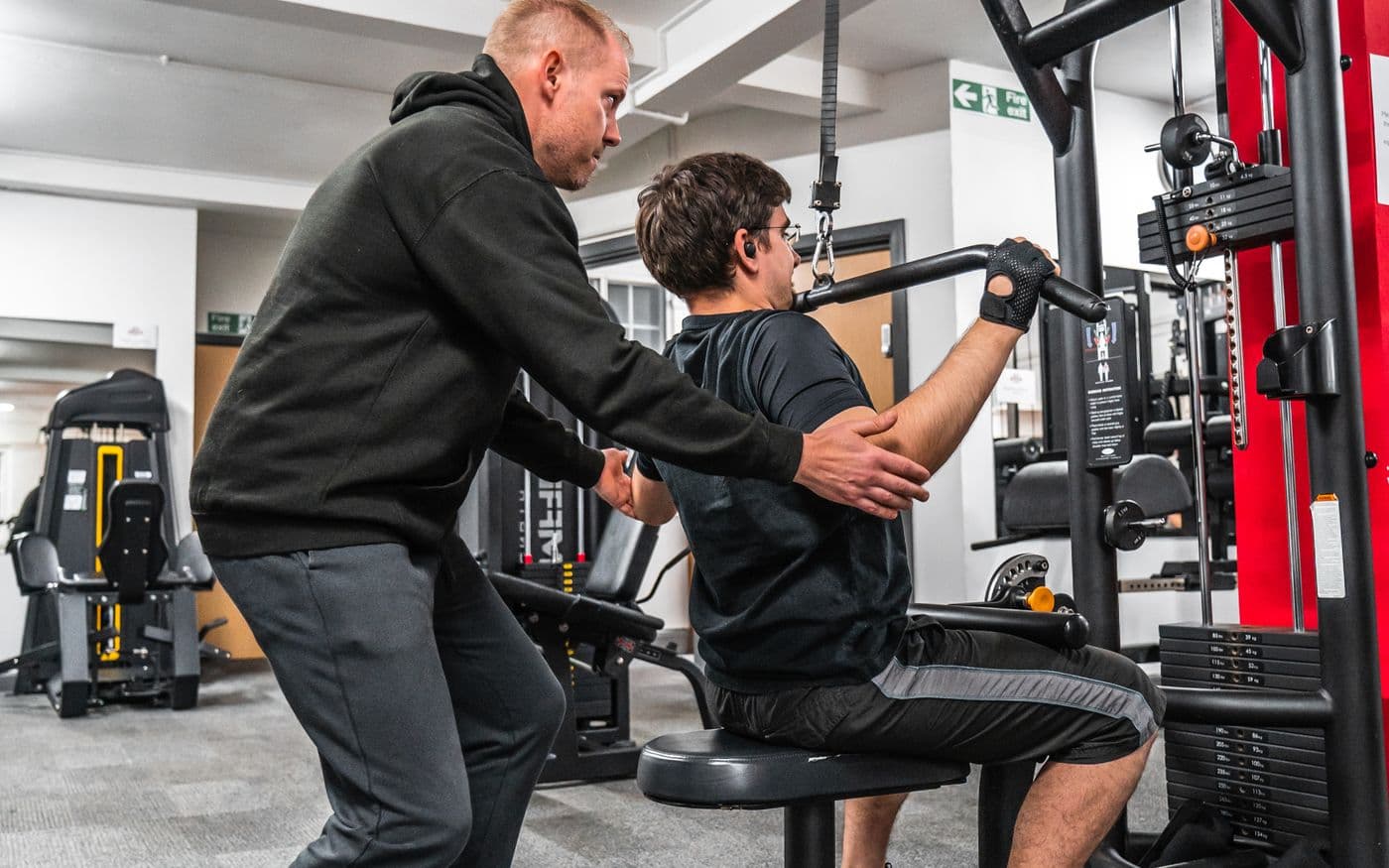
Progressive strength training is the strongest signal you can send your body to preserve muscle – even in a large calorie deficit. Two to three full-body sessions per week built around basic compound exercises are enough to start with. Why strength training is indispensable for weight loss in general is explained in detail in our article on strength training for weight loss.
2. Enough protein despite a small appetite
And here lies the real challenge: GLP-1 medications curb appetite so strongly that many users barely reach their protein targets anymore. With a low energy intake, the requirement rises to 1.8 to 2.7 grams of protein per kilogram of body weight – a multiple of what a small portion of food provides. Protein-rich foods therefore take priority on the plate, spread across three to four meals. Our guide "How much protein per day?" shows you exactly how to calculate your requirement.
What this means for trainers
A new professional field is emerging in the fitness industry right now: GLP-1 users are a growing client group with a clear mandate – protect muscle, build strength, and guide the body through an extraordinary phase. These clients don't need motivational appeals ("just eat less"), but structured training planning, patience in building up load, and basic knowledge of how the medications work.
Course tip from update Akademie: Do you want to coach people through weight loss professionally and individually? In the Personaltrainer programme at update Akademie, you'll learn training planning, client support and coaching from A to Z – part-time alongside your job, hands-on and recognized throughout Switzerland. Exactly the skills that are in demand in the GLP-1 era.
Practical recommendations for supporting the therapy
- Start early: Don't wait until the weight loss is well advanced before starting strength training – muscle protection works best from day one.
- Favor the basics: Squats, deadlift variations, pressing, pulling – big movements, moderate loads, clean progression.
- Eat protein first: With a small appetite, put the protein source on the plate first and eat it first.
- Keep daily life active: Walks and everyday movement complement the training – more on this in our article on steps and health.
- Track progress: Document not just the scale, but also strength numbers and circumferences. Why the scale alone is misleading is covered in "What to do when the scale won't budge?".
Important: the injection is a therapy, not a lifestyle product
GLP-1 medications belong in medical hands: indication, dosage and side effects (nausea, gastrointestinal complaints, rarely more serious complications) require medical supervision. This article is no substitute for medical advice. When it comes to training and nutrition, however, one rule applies regardless of the medication: if you protect your muscle, you lose weight more sustainably – and stay strong and capable after the therapy.
Frequently asked questions about weight-loss injections and muscle loss
Do you automatically lose muscle with Ozempic or Wegovy?
Without countermeasures, yes: studies show that 25 to 40 percent of the weight lost can be fat-free mass. With strength training and sufficient protein, this share can be reduced considerably.
How much training is needed during GLP-1 therapy?
As a guideline: two to three strength training sessions per week, plus as much everyday movement as possible. What matters most is consistency over the entire duration of the therapy.
What happens after stopping the weight-loss injection?
Appetite returns, and without changed habits the weight often climbs back up. If you have built up muscle, a training routine and nutrition knowledge during the therapy, you hold much better cards for keeping the weight off.
Does health insurance in Switzerland cover the costs?
Under certain conditions (BMI thresholds, a doctor's prescription, a defined duration of therapy), some preparations are covered by basic health insurance. The details change constantly – what counts is the information from your doctor and your health insurer.
Conclusion
The weight-loss injection is here to stay – and it doesn't make strength training obsolete, it makes it more important than ever. If you combine GLP-1 therapy with structured training and a protein-rich diet, you lose fat instead of muscle and lay the foundation for a stable weight after the therapy. For trainers, this is the opportunity to build up expertise for this growing target group now.