SuperSlow training is a training method that can intensify strength training in a targeted way. While in classic strength training repetitions are performed in 1–2 seconds, or in modern variants repetitions up to 10–12 seconds, SuperSlow training focuses on extremely slow movements. A single repetition can thereby take up to 20 seconds.
The concept was developed in the 1980s by Ken Hutchins, originally as part of a rehabilitation programme. It later became known through books such as Body by Science by Dr Doug McGuff and was discussed in the fitness scene – mostly controversially.
What is SuperSlow Training?
In SuperSlow training, each repetition is performed very slowly – typically:
- 10 seconds for the concentric phase (e.g. lifting the weight)
- 10 seconds for the eccentric phase (e.g. lowering it)
The movement is carried out in a controlled, even manner and without momentum. The aim is to keep the muscle under continuous tension (Time under Tension) in order to activate all muscle fibres as the tension duration increases.
A typical workout lasts around 15–30 minutes and comprises 4–6 exercises, each with one set to muscular exhaustion.
Goals & Mode of Action
SuperSlow training pursues a clear goal:
🔹 Maximum muscle activation with minimal risk
It is based on the following principles:
- Avoiding momentum: The slow movement prevents the weight from being moved with momentum.
- Optimising tension: The muscle remains constantly under load, which sets a high training stimulus.
- Reducing the risk of injury: Joints, tendons and ligaments are put under less strain, as no jerky movements occur.

Would you also like to turn your hobby into a profession?
Discover the various training programmes of the update Akademie and qualify as a fitness trainer!
🔬 Evaluation of SuperSlow Training
Although SuperSlow training seems simple at first glance, it is quite interesting from a scientific point of view – especially with regard to hypertrophy (muscle growth), strength development and training economy. There are some studies that have investigated the method – with partly positive, partly neutral or limited results. What is important: as with many training methods, the effect strongly depends on the context and the goals of the person training.
- Hypertrophy (muscle building): SuperSlow training can set an effective stimulus for muscle growth – above all through the prolonged "Time Under Tension" (TUT), which is considered an important mechanism for hypertrophy.
- Strength gain: Slowly performed repetitions can improve intramuscular coordination and increase strength.
- Possible improvement of technical exercise execution: The slow execution can make it easier to concentrate on clean technique.
- Explosive strength and athletic performance: This area is handled controversially by various scientific circles. In theory, the method should, among other things due to Henneman's size principle, also promote the development of speed strength. In practice, however, the method is not used very often in this area, as many fear a loss of performance and prefer dynamic, explosive movements. It is important to emphasise that this fear is not scientifically proven.
- Training economy: The time required for a SuperSlow session is low (often < 30 minutes), as a single set to exhaustion can be sufficient. This makes the method attractive for busy people.
In conclusion, one can say that SuperSlow training is certainly effective when it comes to muscle control, targeted hypertrophy, joint protection or rehabilitation, and possibly also in improving athletic performance through an increase in power and explosive strength.
🛠 Application in Practice
SuperSlow training follows a clear principle: maximum muscle control with minimal momentum. This also means, in practical implementation: few, deliberately selected exercises, very slow movements, one set to exhaustion – and done.
The method is efficient but demands absolute concentration. You can use it either as a training system of its own or in phases by integrating it into your existing strength training, for all or just for individual exercises.
🧩 Basic Principles for Your SuperSlow Training:
- Tempos per repetition:
- approx. 10 seconds upwards (concentric) + 10 seconds downwards (eccentric)
- or, depending on the goal, emphasising one of the two phases, e.g. 10 seconds upwards (concentric) + 1 second hold at the turning point + 5 seconds downwards (eccentric). In this case, metabolic adaptations are rather achieved, as the longer concentric phase entails a higher energy demand.
- Turning points: The transition can be direct but controlled without a pause, or also with a short pause
- Repetitions per exercise: 4–6, depending on the weight
- Tension duration: 60–120 seconds
- Sets per exercise: As a rule, only a single set to muscular exhaustion
- Resistance: 10 to 20% lower than usual. Due to the increased intensity of the SuperSlow method (greater energy turnover, neuromuscular control, more targeted isolation of the muscle being trained, less acceleration and deceleration of the muscle being trained), a lower resistance must be chosen compared to other methods.
- Break between exercises: 30–90 seconds
The duration of a complete session is usually between 15 and 30 minutes – often more is not necessary if you really train to muscular failure.

Become a fitness trainer
Turn your passion into a career!
Explore the wide-ranging training programmes of the update Akademie and qualify as a fitness trainer!
🏋️♀️ Example of a SuperSlow Full-Body Workout (machine-based)
- Leg press
Slow pressing and returning – focus on continuous tension in the thighs. Joint angles in which the target muscles lose tension should be avoided. This means that many exercises should be performed within a shorter range of motion. Using the leg press as an example, you should not extend the knees beyond 1500 in order to maintain the tension in the thighs. - Chest press or wall push-up (for beginners)
Slow pressing, no fast movements – maximum muscle tension. - Rowing machine or TRX row
Slow pulling, deliberate return – ideal for the back and biceps. - Lat pulldown or Assisted Pull-up
Pull slowly to the chest, hold the tension, return in a controlled way to the starting position. - Shoulder press or front raise with dumbbells
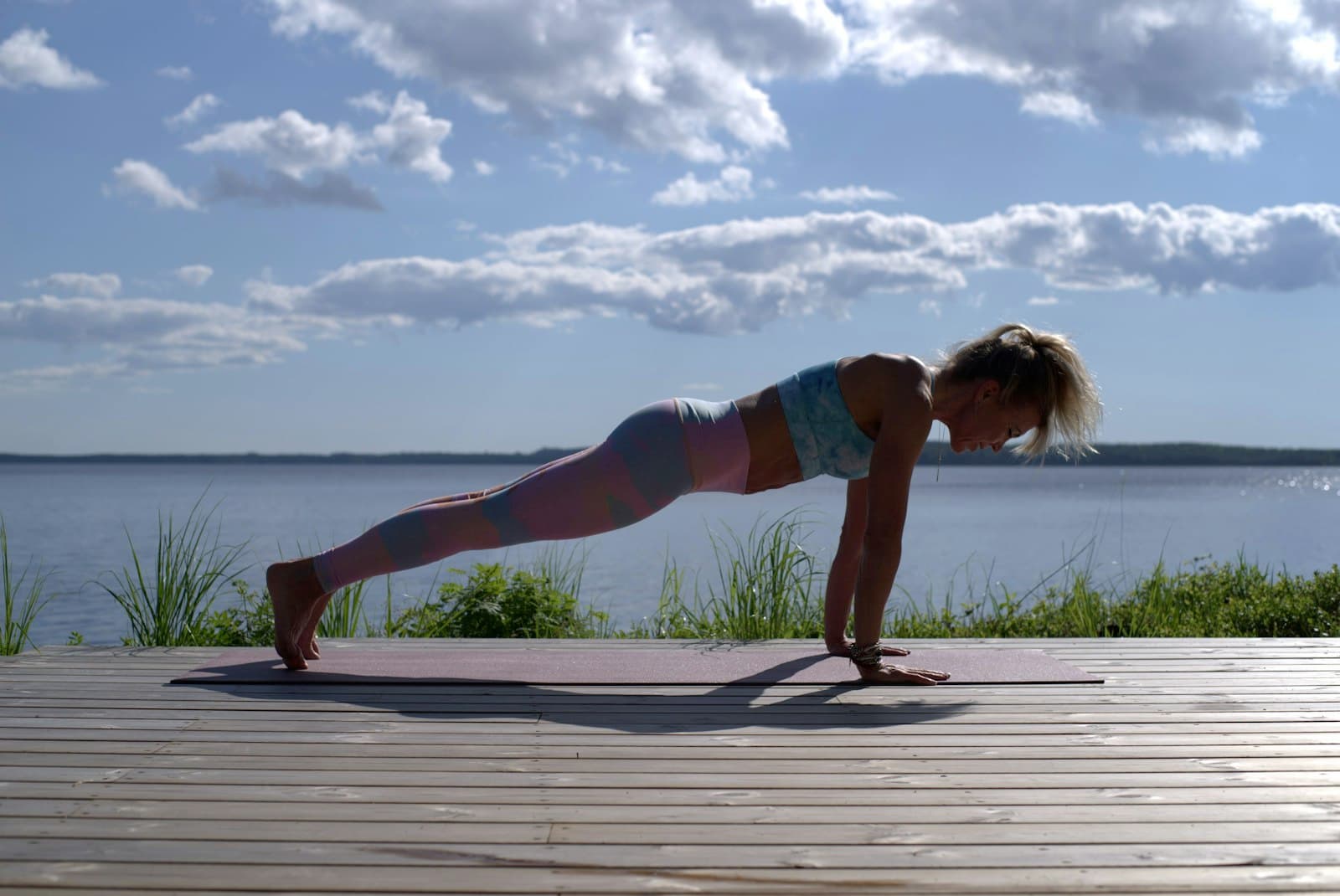
Slow lifting, without momentum – the weight should be light enough to keep control. - Abdominal machine or static plank variation
For core stability – here too: slow movements or controlled hold time.
Depending on your fitness level, you can limit the workout to 4 exercises or extend it up to 6. The method is also very well suited to single-joint exercises, such as the leg extension or biceps curls. What is important: every exercise is performed to genuine exhaustion – one further clean repetition should no longer be possible.
👶 For Beginners
If you are just starting out with SuperSlow training:
- Start with guided machines or stable bodyweight exercises
- Choose a weight with which you would manage about 10–12 clean repetitions at normal tempo
- Concentrate on the flow of movement – not on the weight
Tip: You will be surprised how heavy moderate weights feel with this method.
💪 For Advanced Trainees
- Increase the intensity through isometric hold phases (e.g. 5 seconds at the turning point)
- Try a combination with pre-exhaustion (e.g. isolation exercise before a compound exercise)
- Integrate SuperSlow into a periodised training plan – e.g. as a hypertrophy block or deload phase
- Make sure to perfect your technique – SuperSlow is excellently suited to movement control
Conclusion: SuperSlow Training – Less is Sometimes More
SuperSlow training is an unusual but effective method for promoting muscle growth in a targeted and safe way. It is suitable above all for people who want to build muscle, have little time, value technique and safety, or are in a rehabilitation phase.
💡 Tip: Anyone who wants to vary their routine can incorporate SuperSlow Training in phases