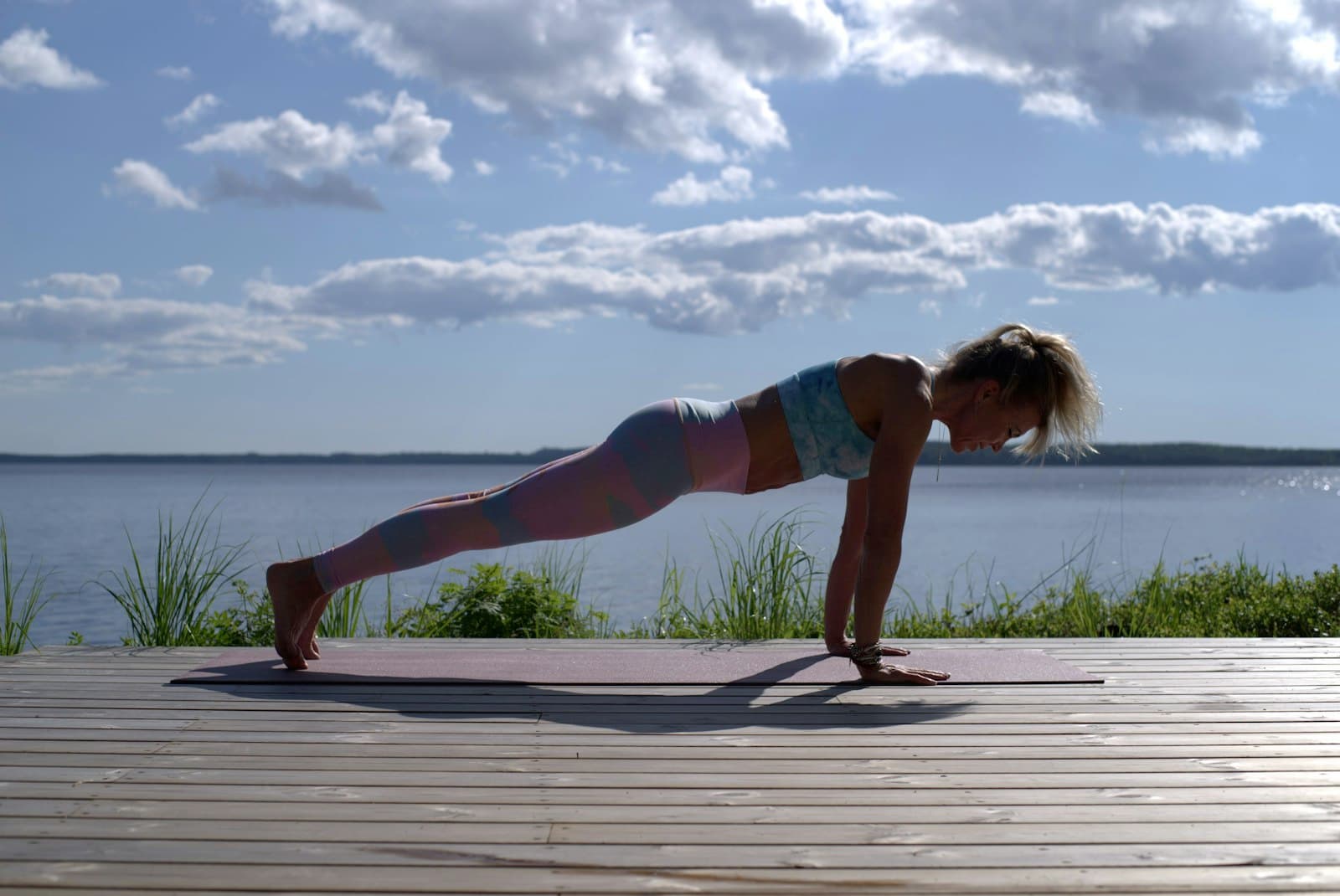
When you think of intelligence, logical thinking or language may come to mind. But your body has a form of it all of its own – motor intelligence. It describes how well your brain plans, controls and adapts movements. Coordination is the visible expression of this intelligence. It determines how harmoniously, precisely and efficiently you move – whether you catch a ball, stand on one leg or perform a complex exercise in training.
Why coordination is more than "balance"
Coordination describes the finely tuned interplay of sensory information, the nervous system and the musculature that underlies every controlled movement. In addition to balance, it also encompasses other coordinative abilities such as reaction ability, sense of rhythm, coupling and orientation ability – that is, all those processes that make movements smooth, purposeful and efficient.
Coordination is like an orchestra: each muscle plays its instrument and the brain, as the conductor, ensures that everything happens at the right moment and at the right tempo. Signals from various sensory channels are constantly processed – visual information (what you see), vestibular signals (your sense of balance) and proprioceptive stimuli (how your body perceives its position).
The better these systems work together, the more efficient movements become. Good coordination training therefore improves not only your balance, but also your reaction ability, movement precision, rhythm and timing – that is, the ability to generate the right muscle tension at the right time.
The result is not only better performance, but also a more protected movement system: your body can react faster and more appropriately to unexpected situations – for example when you trip, slip or suddenly have to rethink in sport.
The brain as a training partner
Coordination arises in the head – more precisely through the interplay of the cerebellum, motor cortex and sensory areas. These areas constantly compare the target and actual states of each movement and continuously adapt muscle activity. When you train your coordinative abilities in a targeted way, you therefore strengthen not primarily your muscles, but the neural connections that make precise movement possible in the first place. That is why coordination training above all improves movement control, reaction speed and precision – abilities that form the basis for every form of training – and thus has a rather secondary, but equally important, effect on strength.
Why pure strength is not enough
Strength training is important – but without coordination it remains unused. A muscle can only unfold its full performance if the nervous system knows when and how to deploy it. Anyone who only becomes stronger, but not more coordinated, often moves uneconomically. This leads to faster fatigue, a higher risk of injury and stagnating performance.
Good coordination means activating the right muscle group at the right moment – and letting the others go. This is how efficient movement arises instead of unnecessary tension.

Would you also like to turn your hobby into a profession?
Discover the various training programmes of the update Akademie and qualify as a fitness trainer!
How to promote coordination in everyday life and training
Coordination can be trained at any age and at any level – and it benefits most from variety and attention. The goal is to challenge your nervous system again and again with new, slightly altered tasks.
This can begin in everyday life: stand on one leg while brushing your teeth, carry shopping bags alternately in the left and right hand, or switch hands for once when writing, blow-drying or eating. Such small challenges train your sensorimotor control – that is, the connection between perception and movement.
In training you can expand the principle in a targeted way: vary familiar exercises – do squats barefoot, on an unstable surface or with your eyes closed (with a little less weight for that). Work with rhythm and timing – perform movements sometimes fast, sometimes slow. Or integrate dual tasks: combine movement with thinking tasks, such as juggling while standing on one leg.
In principle, coordination is trained alongside in most forms of training or movement – for example in strength or endurance training –, if you consciously pay attention to technique, movement flow and precise execution. Every repetition that you perform in a controlled and focused way trains your nervous system and refines your movement patterns.
The nervous system learns through fine-tuning. Every new stimulus promotes new neural connections. That is precisely why coordination training often feels playful – but the training effect is enormous: more movement quality, better body control and, in the long term, fewer injuries.
Conclusion: smart movement is real strength
Coordination training is the key so that your body can also implement precisely what it is capable of. It makes you more capable, safer and more movement-competent – no matter what level.
Motor intelligence shows itself not in muscle size, but in the ability to shape movement elegantly, efficiently and adaptably. Or, put differently: real strength arises when body and brain speak the same language.