Have you ever wondered what exactly coordination skills are and why they are so important for sport and everyday life? Here you'll learn everything you need to know.
Coordination skills are, according to Hirtz (1981), abilities shaped above all by the processes of movement control and regulation. They enable you to perform motor actions safely and efficiently, in both predictable and unpredictable situations. Thanks to coordination skills, you can learn athletic movements faster and master them more reliably.
But what distinguishes coordination skills from motor skills proper? While coordination skills are the basic prerequisites for any movement, motor skills describe specific, often automated movement patterns. To develop these skills, you therefore already need a solid foundation of coordination skills.
The five main groups of coordination skills:
- Sensory differentiation ability: This is the ability to evaluate incoming sensory information and adjust your movement precisely in response. One example is catching a ball – depending on its speed, you adjust your force.
- Spatial-temporal orientation ability: This refers to the ability to determine your body's position and movement in space and time. It is especially important in team sports such as football or basketball, in order to position yourself correctly on the field.
- Reaction ability: How quickly do you react to a signal? This ability shows, for example, when a sprinter reacts to the starting signal. A fast reaction can be decisive in many sports.
- Rhythmic ability: This is the ability to perform movements in rhythm – whether an internal or external rhythm. In dance classes or fitness classes that run in time to the music, this ability plays a major role.
- Balance ability: It helps you keep your body in balance, even after a rapid shift of the body, for instance during a jump. Good balance is an advantage in almost all sports.
In addition to these five basic abilities, there are two more important ones: the coupling ability and the learning ability. Coupling ability describes the ability to link different movements so that a coordinated overall movement results – as in the jump shot in handball. Learning ability, on the other hand, is important for acquiring new movement patterns quickly and effectively.

Would you like to turn your hobby into a profession too?
Discover the various training programmes of the update Akademie and qualify as a fitness trainer!
How do I train coordination skills?
Coordination skills can be improved through targeted training in various disciplines. Here are some practical tips on how to incorporate them into your training:
- Sensory differentiation ability: Try catching balls of different sizes and weights. Vary the throwing strength, distance and so on to improve your reaction and adaptation.
- Spatial-temporal orientation ability: Play sports in which you have to orient yourself constantly in space, such as football or basketball. Use markings or objects as orientation aids.
- Reaction ability: Train with reaction lights or let a training partner surprise you with acoustic or visual signals.
- Rhythmic ability: Take dance classes or try to match your movements to music, for example while running or in the gym.
- Balance ability: Try balance exercises such as standing on one leg or training with a balance board. This improves your balance and stability.
Who is coordination training suitable for?
Coordination skills are important for every age group and every fitness level. Whether you are a beginner wanting to improve your basic motor skills or an experienced athlete looking to boost your performance further – coordination training helps you act faster and more precisely. Especially in sports such as tennis, handball, football or athletics, good coordination is decisive for success. As you get older, balance ability also becomes increasingly important, as it contributes decisively to fall prevention. Since the risk of falling increases with age, good balance is essential to minimise that risk.
Interestingly, coordination skills are often also trained indirectly in various forms of exercise. In strength training, for example, you promote balance ability when you perform exercises with free weights. Likewise, coupling ability is engaged when lifting heavy weights, as you have to coordinate several muscle groups at the same time.
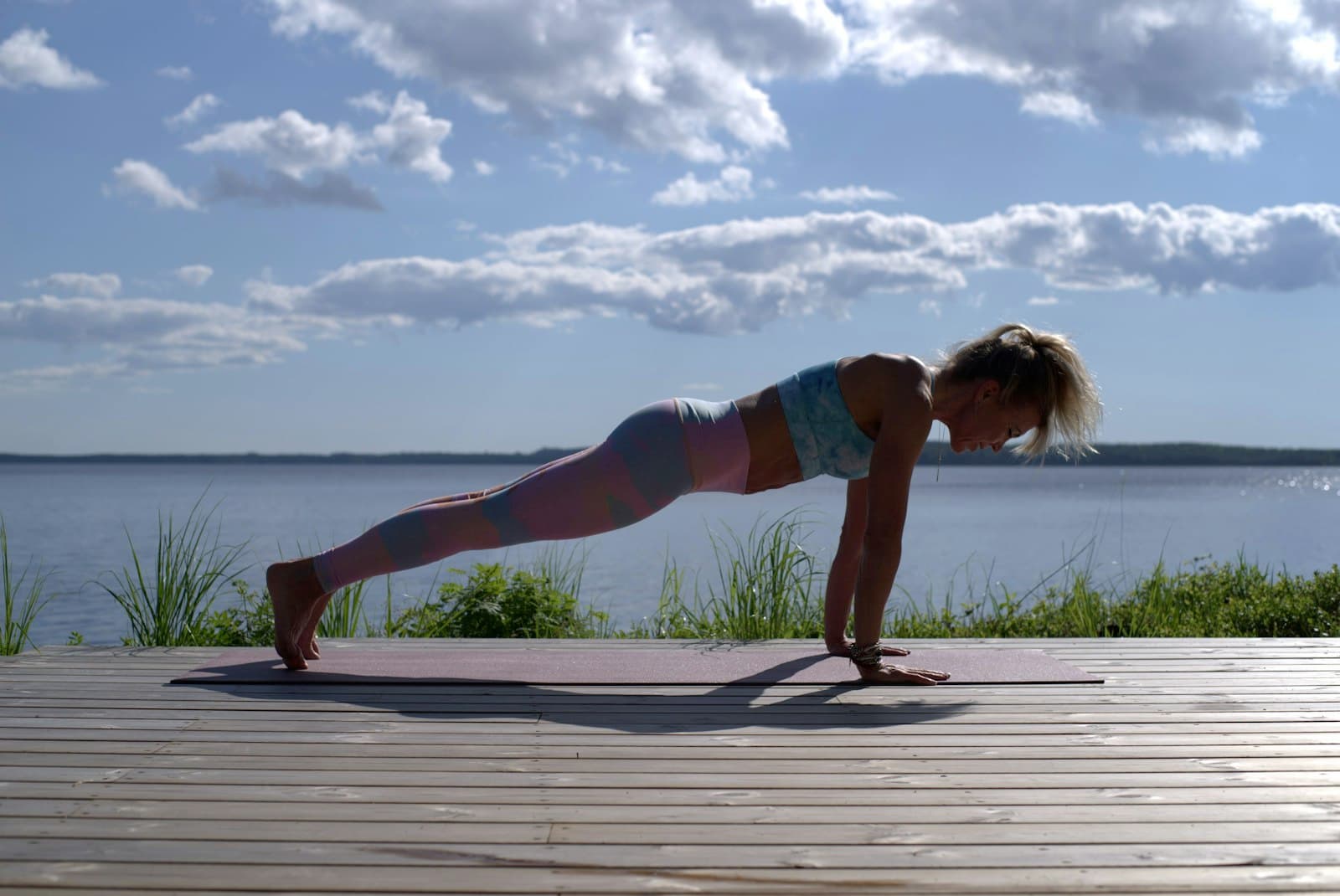
In mobility training, especially during dynamic stretching or yoga, rhythmic and balance abilities are trained, as you have to perform the movements precisely and fluidly.
In endurance training too, coordination skills come into play. Running on uneven terrain challenges spatial-temporal orientation ability, while rhythmic ability is trained through steady running over long distances.
For adults, it is therefore often not necessary to train coordination skills separately, as they are already integrated into many common forms of exercise. If you do want to improve your coordination in a targeted way, however, it is worth adding specific exercises to your training.