Strength training: more than just movement – a holistic influence on your body
Strength training is far more than lifting weights. It not only has a direct influence on building muscle, but also strengthens many other systems of your body, such as the nervous system, the bones, tendons and ligaments. These adaptations are often closely connected with building muscle, since a stronger muscle demands more stable structures and improved movement function. Training can moreover be steered in a targeted way to place the focus on the adaptation of certain systems or structures. The effect of strength training thus extends far beyond the muscles, which we will mainly consider in this article, and contributes to long-term health and performance.
Muscles: the precise movers of your body
The main task of the muscles is to enable movements around the joints – precisely and efficiently. In doing so, they generate torques that control the movements. A torque arises from the muscle force and the distance (lever arm) between the point where the force acts and the joint axis. The greater the lever arm and the force, the more efficiently the joint moves.
An example: during the biceps curl, the muscle generates a torque that moves the dumbbell upward. At the same time, an external torque acts through the weight of the dumbbell, counteracting your muscle. Small changes in the movement angle can noticeably alter the load – a good example of the precision of your muscles.
Why muscles also "work" when nothing happens
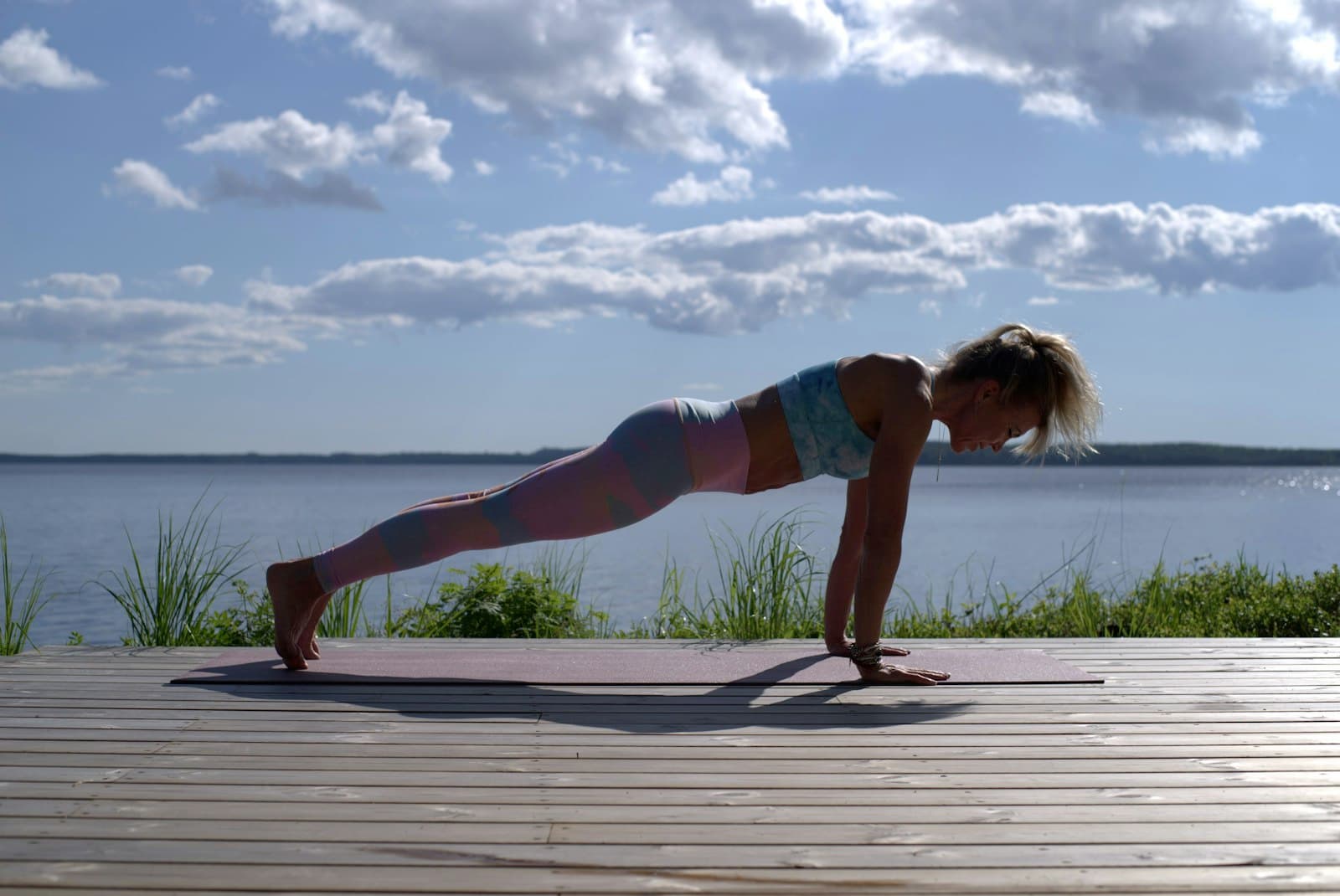
Muscles perform work even when they seemingly do not move. A classic example of this is holding a weight – so-called isometric muscle activity. Here the muscle length and the joint angle stay the same, yet the musculature generates tension to stabilize the position. This process is decisive for posture, stability and safety during strength training. This stabilization is especially important in the context of muscle training, as it forms the basis for efficient loading.

Would you also like to turn your hobby into a profession?
Discover the various training programs of the update Akademie and qualify as a fitness trainer!
Slow movements: the key to effective muscle building
Muscle strength is the basis of effective strength training, and slow movements play a central role in it. During slow repetitions, force development remains constant throughout the entire movement. In comparison, fast movements do generate short-term force peaks, but the load drops quickly due to the principle of inertia.
The principle of inertia states that a body remains at rest or continues to move uniformly as long as no external force acts on it. In the biceps curl this means: a high initial force accelerates the dumbbell so strongly that for a short time it no longer needs as much force to keep being moved. Only when gravity again becomes higher relative to our force does the dumbbell slow down and we have to work harder again.
Why slower is better: slow, controlled movements not only ensure an even muscle load, but also allow you to concentrate better on technically correct execution. This protects your joints and considerably reduces the risk of injury – a decisive advantage for sustainable muscle building.
Practical tips for your strength training
If you train with the goal of building your muscles and want optimal results, you should therefore take the following tips into account for your training :
- Slow execution: perform every movement in a controlled way to keep the muscle activity constant and protect your joints.
- Optimize technique: pay attention to correct technique and the correct alignment of your joints to avoid injuries.
- Plan for recovery: muscle building does not happen during training, but in the recovery phase. Give the muscles you have trained 48 to 72 hours of recovery time before you intensively load them again. Support recovery through sufficient sleep, a balanced diet and active recovery, such as light stretching or walks.
- Adjust training frequency: for optimal muscle building you should train your target muscles 2 to 4 times per week, depending on your experience and your recovery needs. Make sure to distribute the training intensity and the load evenly across the different muscle groups to avoid overloading.
- Train in a varied way: combine concentric (shortening), isometric (holding) and eccentric (lengthening) movements to challenge your muscles in a varied way.
- Measure progress: track your progress with clear goals, such as weight, repetitions or time, respectively duration of tension.
- Additional support: a protein-rich diet can support muscle building, as proteins supply the building blocks for muscle fibers. Supplement your training when needed with targeted exercises for weaker muscle groups and a regular adjustment of the intensity to keep making progress.
Summary: your path to strong muscle building
Effective strength training, as Marco Toigo describes it in his book MuskelRevolution, is based on a sound understanding of muscle strength and movement. It is not just about moving weights, but about challenging the muscles in a targeted way to promote growth while improving the functionality of the entire body. With scientifically based approaches like the ones described, you can achieve long-term success and give your body the best.