
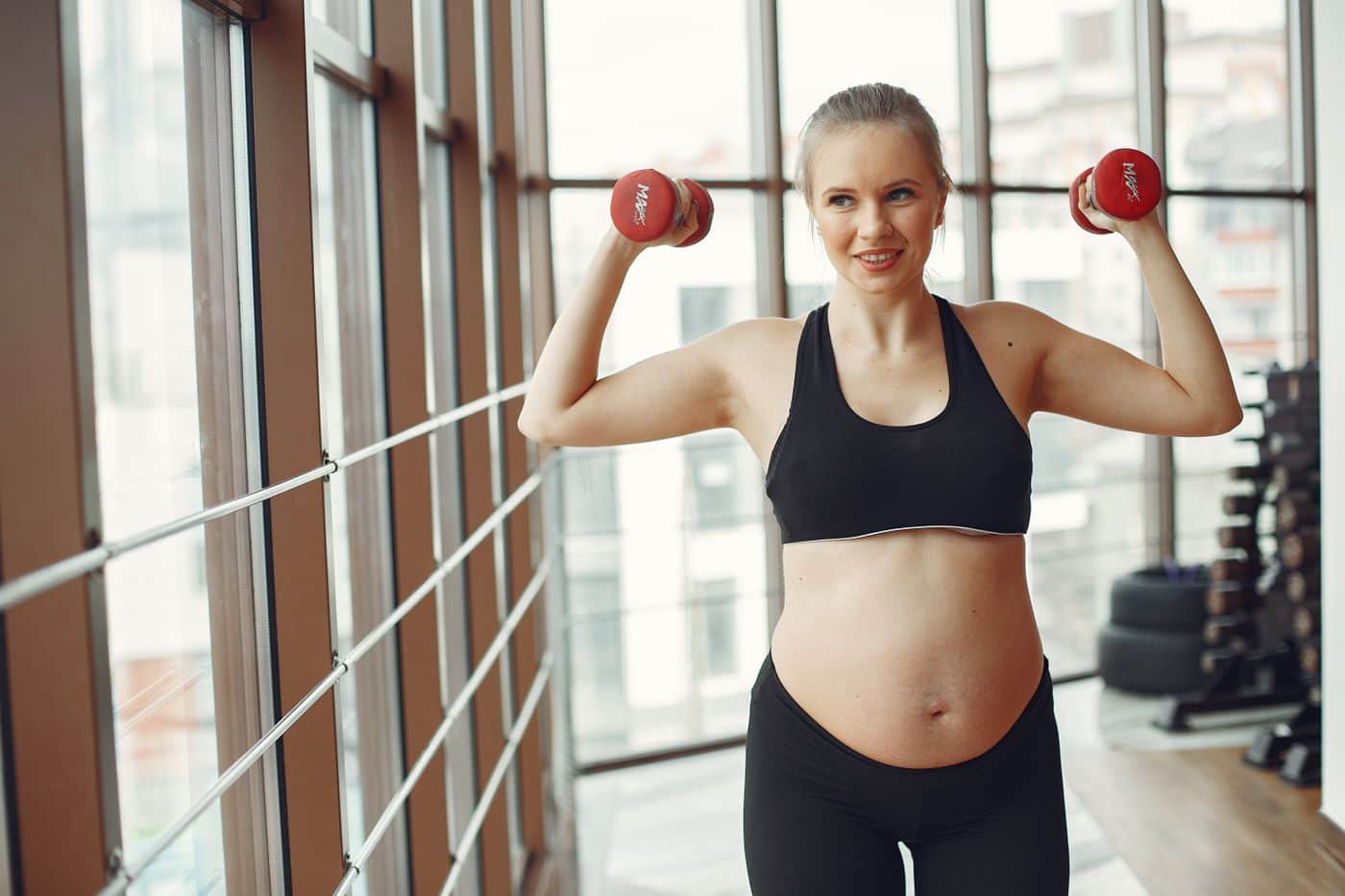
Pregnancy and Sport
Supporting pregnant and breastfeeding clients with professional confidence
Trimesters, pelvic floor, rectus diastasis, limits: the workshop gives you the guidelines to train pregnant clients safely and with confidence.
TWINT · Mastercard · VISA · PayPal · Secure payment
Pregnant clients have long been part of everyday life in the gym – and yet there is still a great deal of uncertainty on the training floor. Can she still train her abdominals? How heavy is she allowed to lift? When does it stop? This workshop gives you the technical foundations and clear, applicable guidelines, so that you support pregnant and breastfeeding women competently instead of turning them away out of caution.
The workshop takes you from the physical changes of pregnancy through to concrete training recommendations, and on to the situations in which no training takes place at all. At the end you have a guide for practice: for training during pregnancy and for the postnatal recovery phase that follows.
What you learn
- How pregnancy is structured into three trimesters – ‘time of adaptation’, ‘time of well-being’, ‘time of strain’ – and what each phase means for training
- Organic changes: breathing, the musculoskeletal system and spine, the pelvis, the abdominal muscles and the cardiovascular system
- Why exercise works during pregnancy – with ten evidence-based arguments, from making the heart work more economically to a lower risk of gestational diabetes
- The foetus and its supply: the role of the uterus and the placenta, vena cava syndrome, core temperature, hypoglycaemia and fluid balance
- The guidelines for fitness training: concrete specifications for strength training and endurance training during pregnancy
- The pelvic floor in its full function – in interplay with the abdominal and back muscles, the bladder, the rectum, the uterus, sexuality and breathing
- Rectus diastasis: how it arises, why it is a normal adaptation and what follows from it for training
- Limits and risks: the situations in which fitness training is suspended – from vaginal bleeding through placenta praevia to threatened premature birth
- A guide for coaches: how to lead the conversation, assess risks and rebuild training after the birth
Who the workshop is for
For fitness and movement trainers, personal trainers, group fitness instructors and health trainers who look after pregnant or breastfeeding clients – on the training floor, in personal training or in group classes. The workshop is aimed at professionals in advice and support, not at medical staff: it does not replace any medical assessment, but shows you where your responsibility lies and where it ends.
How the workshop works
The workshop runs entirely online and at your own pace. After you sign up you receive your login details for the learning platform, which guides you through the content step by step.
- Self-study with the detailed workshop script and the presentation slides
- Eight interactive learning videos – one per topic block, from pregnancy through to the guide for coaches
- You clarify questions by email to info@update-akademie.ch or in an online consultation with a specialist
- To finish, the assessment on the learning platform; you then receive your workshop confirmation
Where it leads next
The workshop is a focused deepening and does not require any particular diploma. If you want to build up or refresh the technical foundation for it, you will find it in the Fitness and Movement Trainer training. If you work mainly in a one-to-one setting, you can deepen individual client support as a Personal Trainer. Further topics for deepening are listed in the overview of fitness workshops – among them pathophysiology and anatomy and physiology.
What our graduates say
Completed this training? Share your experience.
Frequently asked questions
Do I need a trainer qualification for the workshop?
The workshop does not require any particular diploma. It is aimed at people who work with clients in the fitness and movement sector, and it assumes that the basic concepts of anatomy and training theory are familiar to you. A basic understanding of anatomy makes the chapter on the pelvic floor considerably easier.
What does the workshop include?
You receive a detailed manual, the presentation slides and eight interactive learning videos – one per topic block, from pregnancy through the pelvic floor to the guide for coaches. On top of that come support by email and the option of attending an online consultation with a specialist.
Does the workshop also cover training after the birth?
Yes. A separate part is devoted to postnatal recovery. It names a training start around six weeks after a vaginal birth and eight weeks after a caesarean section, recommends a postnatal recovery course for the pelvic floor, back and abdomen, and explains why high-impact sessions and stop-and-go patterns are not yet advisable during the breastfeeding and recovery phase.
How do I complete the workshop?
Once you have worked through the content, you sit the assessment on the learning platform. You then receive your workshop confirmation. You decide when: the workshop runs entirely online, free of time and place constraints and at your own pace.