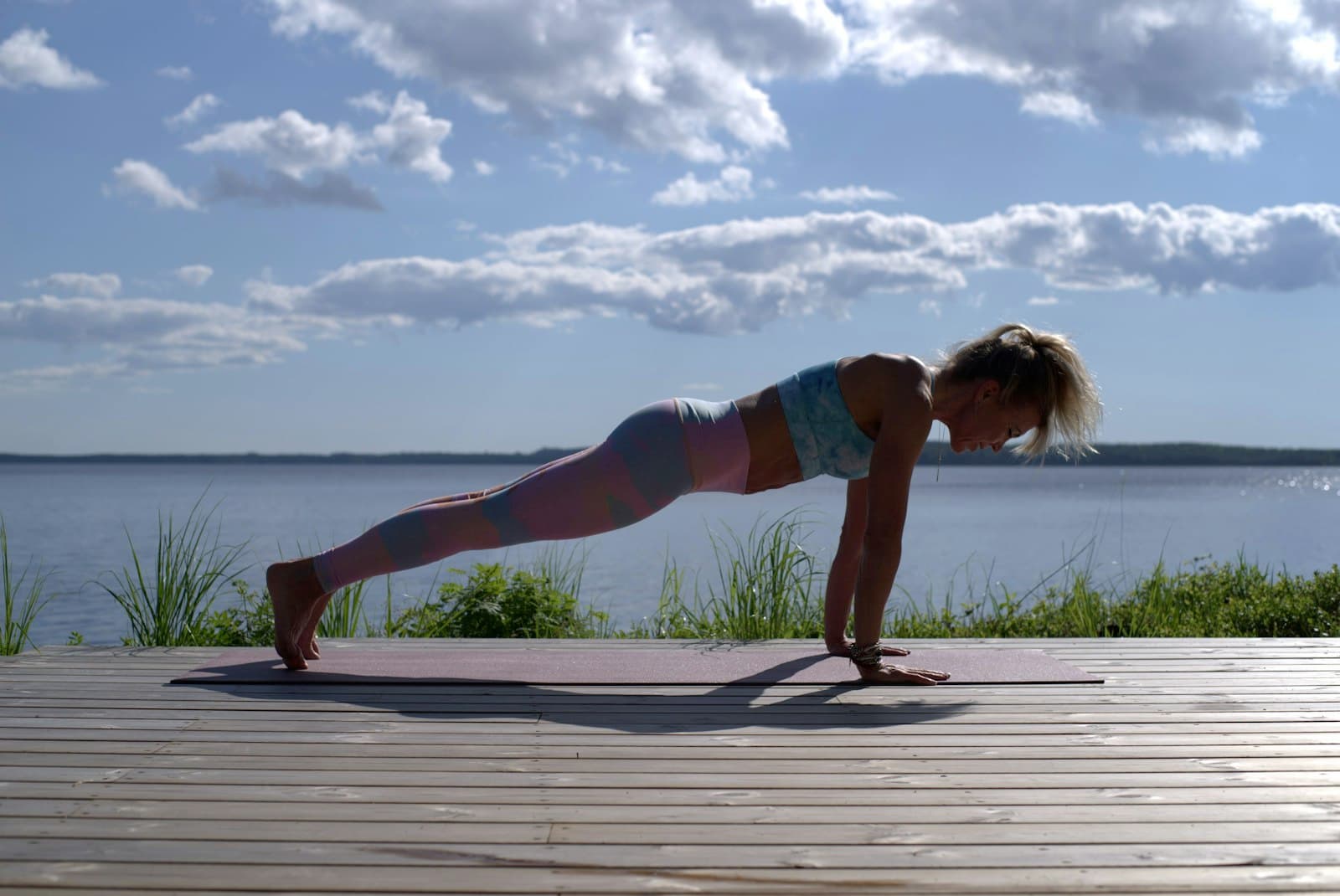
Stretching is often seen as the standard solution for improving mobility. Besides many stretching methods, however, there is also so-called length training, which is characterised by active muscle contraction and structural adaptations of the muscles. But what are the differences, and which method makes sense and when? In this blog we take a look at the mechanisms behind both approaches, their neural and structural effects and the role of strength training in increasing mobility.
Stretching – The classic method explained
In stretching, muscles are lengthened either statically or dynamically:
- Static stretching: The muscle is brought into a specific position and held for a duration (usually 20–30 seconds).
- Dynamic stretching: The muscle is stretched through controlled, bouncing movements.
Aim and effect
Stretching focuses primarily on neural adaptations. This means that through regular stretching the sensitivity of the nervous system is reduced, whereby the muscles offer less resistance during stretches. This also explains why short-term mobility improvements are possible after a stretching session – the muscles "give way". The structural adaptation, however, remains limited.
Examples of stretching exercises
- Hip flexor stretch: In a lunge, push the hip forward and feel the stretch in the hip flexor.
- Thigh stretch: Pull one leg backwards until the heel touches the buttocks.
In sports such as artistic gymnastics or rhythmic gymnastics, static stretching is often carried out with longer tension durations – sometimes several minutes per muscle group, in order to achieve the mobility needed for complex movement patterns.
Length training – More than just stretching
Length training combines stretching positions with active muscle contraction at maximum muscle length. It targets both the neural adaptations of stretching and the structural adaptations of the musculature.
How does length training work?
- Isometric tension phases: The muscle is held under tension in its maximum stretch position for at least 12 seconds.
- Sarcomere lengthening: Through the load in the stretched position, with corresponding repetition fatigue, additional sarcomeres are theoretically added in series, which lengthens the muscle.
Additional thought: Since this is a form of muscle hypertrophy – but in length and not in width –, tension durations similar to those of classic strength training (30–180 seconds per muscle group) could be optimal to stimulate the greatest adaptations.
However, this concept is not undisputed in science. While it is considered certain during the developmental phase (as muscles adapt to bone growth), it is controversial in adults whether these adaptations can actually be achieved in the long term.
Examples of length training
- Calf extensor: Stand on an incline, let the heels sink and hold the position while actively exerting pressure on the floor, as if you wanted to rise onto your toes without actually doing so.
- Hip flexor: Kneeling, slowly push the hip forward and hold the tension for at least 12 seconds, as if you wanted to move the back leg forward.

Would you also like to turn your hobby into a profession?
Discover the various training programmes of the update Akademie and qualify as a fitness trainer!
What can strength training contribute to increasing mobility?
Strength training, carried out over the full range of motion (Range of Motion, ROM), can also contribute to lengthening the muscles.
Important factors: ROM and tension duration
- ROM and tension: When, in the deep squat, the musculature is under tension for several seconds at the turning point, the leg musculature is not only strengthened, but certain muscles are forced to stretch over their full length and to produce force in this state. This can potentially promote the length growth of the affected muscles (serial hypertrophy).
- Tension duration: Studies and training approaches show that the minimum load duration of 12 seconds can be reached either at once, as in length training, or split into smaller phases of 2–3 seconds each. During the stretched phase of the muscle, a hold of 2–3 seconds can be inserted at each repetition, whereby the required tension duration adds up.
Important equipment suppliers for length training
Some equipment manufacturers, such as Five-Konzept and Fle.xx, offer specially developed training devices that support length training in a targeted way. Both follow similar approaches by bringing muscles to their maximum length while at the same time enabling controlled tension. Especially in the case of complaints such as back problems or shortened hip musculature, these devices can be individually tailored to the user through precise settings and help to promote structural adaptations of the musculature.
♦ Tip: Effective length training can also be carried out without devices. With the right techniques, many exercises can be performed on the mat or with simple aids, by actively tensing the stretched muscle for the specified duration.
When are the methods suitable?
Stretching:
- Before or after sport, to improve mobility in the short term.
- For relaxation after intense efforts.
- As the main component of a session in sports such as artistic gymnastics or rhythmic gymnastics, where longer stretching phases are used per muscle group.
Length training:
- In the case of existing muscle shortenings or complaints, such as back pain due to shortened hip muscles.
- As a separate or integrated training session, to train mobility and muscular stability in a targeted way.
- In combination with strength training, to promote mobility and strength over a large range of motion.
The special feeling after length training
A special feature of length training is the pleasantly relaxed, slightly fatigued feeling in the muscles after training – similar to that after strength training. This feeling indicates that the muscles have not only been stretched, but have also worked actively.
Now it's your turn: Try out the different methods and find out which combination helps you best to achieve your goals. Your body will thank you! 😊