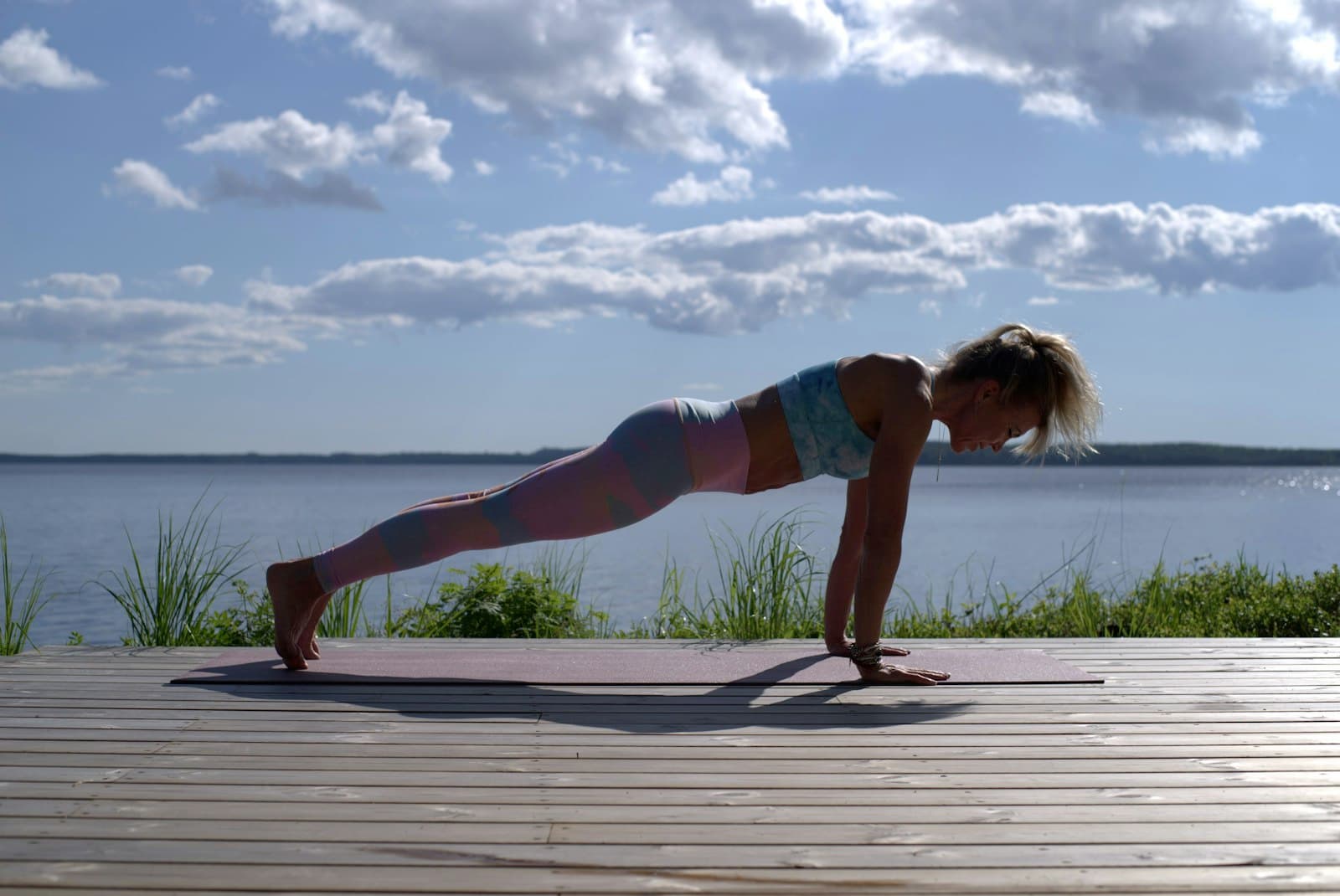
"I'm too old for sport" – a sentence you sadly still hear often. Yet science has long shown: movement makes sense at any age – and in old age in particular it's a decisive factor for health, independence and well-being. With targeted training in old age you can promote strength, mobility and coordination, and thus do something active for your quality of life.
In this article you'll learn what matters when training in old age, what benefits it brings and what a sensible training plan can look like.
Why is training in old age so important?
With increasing age, muscle mass, bone density and mobility naturally decline. Balance often gets worse too, which increases the risk of falls. But this is exactly where targeted training in old age comes in: it helps you actively counteract these processes.
Regular exercise promotes not only physical but also mental fitness. Studies show that strength and endurance training has positive effects on brain function and emotional well-being.
The benefits of training in old age
A well-adapted training in old age brings many health and everyday-practical benefits:
✅ Maintaining and building muscle strength: For safe lifting, carrying and standing up and much more. ✅ Improving balance and coordination: To avoid falls and strengthen balance. ✅ Promoting mobility: For more comfort and independence in everyday life. ✅ Strengthening the cardiovascular system and metabolism: Exercise supports the heart, the circulation and helps prevent lifestyle diseases. ✅ Positive effects on the psyche: Training can strengthen self-confidence and ease depressive moods.
What should you pay attention to when training in old age?
For training to be safe and effective, there are a few important basic rules:
- Individual adaptation: Choose exercises and intensity to suit your current fitness level and any health restrictions.
- Technique before intensity: Correct execution comes first – even (and especially) when the movements seem simple.
- Combining different training forms: Rely on strength training, endurance, mobility and coordination.
- Progression and variety: Small increases are important in order to make progress. At the same time, variety helps keep motivation high.

Would you like to turn your hobby into a profession too?
Discover the various training programmes of the update Akademie and qualify as a fitness trainer!
Training content: what belongs in good training in old age?
A holistic training in old age should cover various elements in order to specifically promote strength, mobility, coordination, balance and endurance. Important here: which exercises are concretely sensible and safe always depends on your individual starting point and your goals. Together with a trainer the suitable programme is put together for you.
The building blocks of good training include:
🟢 Strength training: Targeted strengthening of the muscles to maintain everyday functions and protect against falls. Here, exercises are used that are adapted to your needs – for example for the legs, back, core and shoulders.
🟢 Mobility training: Mobilisation and stretching exercises to maintain the mobility of the joints and improve posture.
🟢 Coordination and balance training: Measures to promote steadiness and to train movement control – tailored to your current performance level.
🟢 Endurance training: Regular exercise to support cardiovascular health – in a form that you enjoy and that fits your everyday life.
Training in old age – common concerns and misconceptions
❌ "I'm too old to train." → Fact: it's never too late to start moving. Even in old age, improvements in strength, balance and endurance are possible.
❌ "Strength training is dangerous for older people." → Fact: correctly applied, strength training is safe – and one of the best protective factors against falls and frailty.
❌ "Endurance training alone is enough." → Fact: endurance is important, but only in combination with strength and balance training does the training become truly holistic.
Conclusion: movement as the key to an active life
Targeted training in old age is an effective way to stay mobile, independent and capable well into old age. It's not about peak performance, but about quality of life. Those who regularly train strength, mobility, coordination and endurance do their body and mind good – and increase their enjoyment of everyday life.