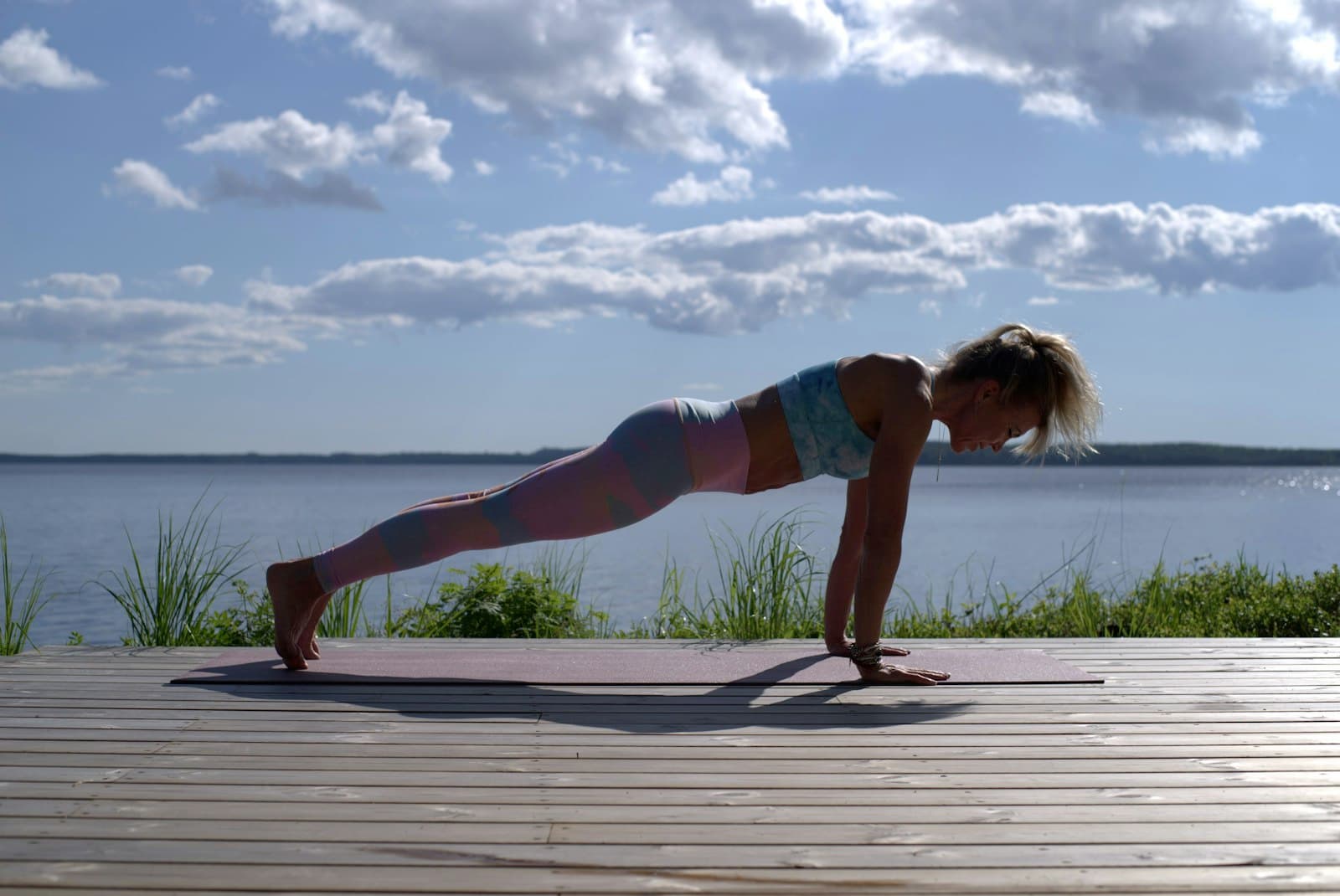
Proprioception refers to your body's ability to perceive the position and movement of the joints as well as the tension of the muscles, without needing visual cues. This so-called deep sensitivity allows you to perform movements precisely and to keep your balance – whether walking, running or during more complex movement sequences in sport.
What is proprioceptive training?
Proprioceptive training aims to sharpen this body awareness. It uses targeted exercises that improve your sensory and motor skills. The goal: optimised control over your movements, which is not only advantageous in sport, but can also prevent injuries in everyday life. To achieve these goals, unstable conditions are often used that force your body to adopt a biomechanically optimal posture. This way, you can perform movements more gently on the joints and more efficiently, which promotes not only joint health but also your performance.
It's important to emphasise that this type of training should not be confused with classic strength training. Although strength exercises can also be used, the resistance should be significantly lower than in strength training and the exercise should not be performed to muscular failure, in order to promote the quality of execution and avoid injuries.
Training equipment for proprioceptive training
To carry out proprioceptive training optimally, you can draw on various pieces of training equipment:
- Balance boards, training cushions, gym balls, balance domes: perfect for balance and stabilisation exercises, both for the lower and upper body and the core (squats without added weight, planks or push-ups on the knees, etc.).
- Wooden sticks: they help you, as reference points, to stabilise your posture, to perceive your body better and to consciously control your movements. One example: a training partner holds a wooden stick along your back while you perform squats (without or only with light resistance). Your goal is to keep the contact points of your body with the stick constant throughout the movement, in order to ensure a correct posture of the spine.
- Training slings: these are ideal for creating unstable conditions and training the whole body at the same time.
- Kettlebells: thanks to the asymmetrical weight, you can perform exercises like the single-arm shoulder press or bench press, to train the optimal posture of the shoulder, elbow and core.
- Elastic bands: these increase the resistance and require more stabilisation. They also help you learn how to consciously activate certain muscle groups, e.g. the abductor group during the "monster walk".

Would you also like to turn your hobby into a profession?
Discover the various training programmes of the update Akademie and qualify as a fitness trainer!
Biomechanical optimisation through unstable conditions
Through the unstable conditions created during proprioceptive training, your body is forced to reach a biomechanically optimal position. This ensures that the movements are performed more efficiently and more gently on the joints. This way, you can promote your joint health in the long term and increase your athletic performance.
However, if you don't perform the movements correctly under unstable conditions, you should return to more stable conditions and learn the correct technique before attempting the unstable variants again.
Tips and examples for practical implementation
Here are some simple exercises that you can easily integrate into your everyday life:
- Single-leg stance: stand on one leg and try to keep your balance. You can intensify this exercise by closing your eyes or standing on an unstable surface, such as a cushion or a balance mat.
- Wobble board exercises: use a balance or wobble board to train your proprioceptive abilities. On a wobble board you can perform various exercises or movements, such as squats, planks, push-ups etc. This way you not only strengthen the deeper muscles, but also learn to bring your joints into the optimal posture.
- Single-arm shoulder press or bench press with kettlebell (bottoms-up): in this exercise, the unevenly distributed weight and the inverted grip of the kettlebell force your entire body, the core, the shoulder and the whole arm to stay stable. The unstable situation forces your body to adopt the optimal posture in order to perform the movement correctly and efficiently and to protect the joints.
- Rowing with training slings: this exercise activates the back muscles and at the same time challenges the core muscles to hold the body in a stable position while you work against the slings.
- Rope skipping: it sounds simple, but it's effective! Rope skipping promotes coordination and improves the interplay of your muscles and joints.
Conclusion
Proprioceptive training is a valuable addition to any fitnessor rehabilitation programme. Whether you're an athlete, recovering from an injury or simply want to improve your general body awareness – this form of training will help you move more safely and stably. With the right training equipment and the appropriate technique, you can improve your joint health and prevent injuries. So, what are you waiting for? Start your first exercises today!