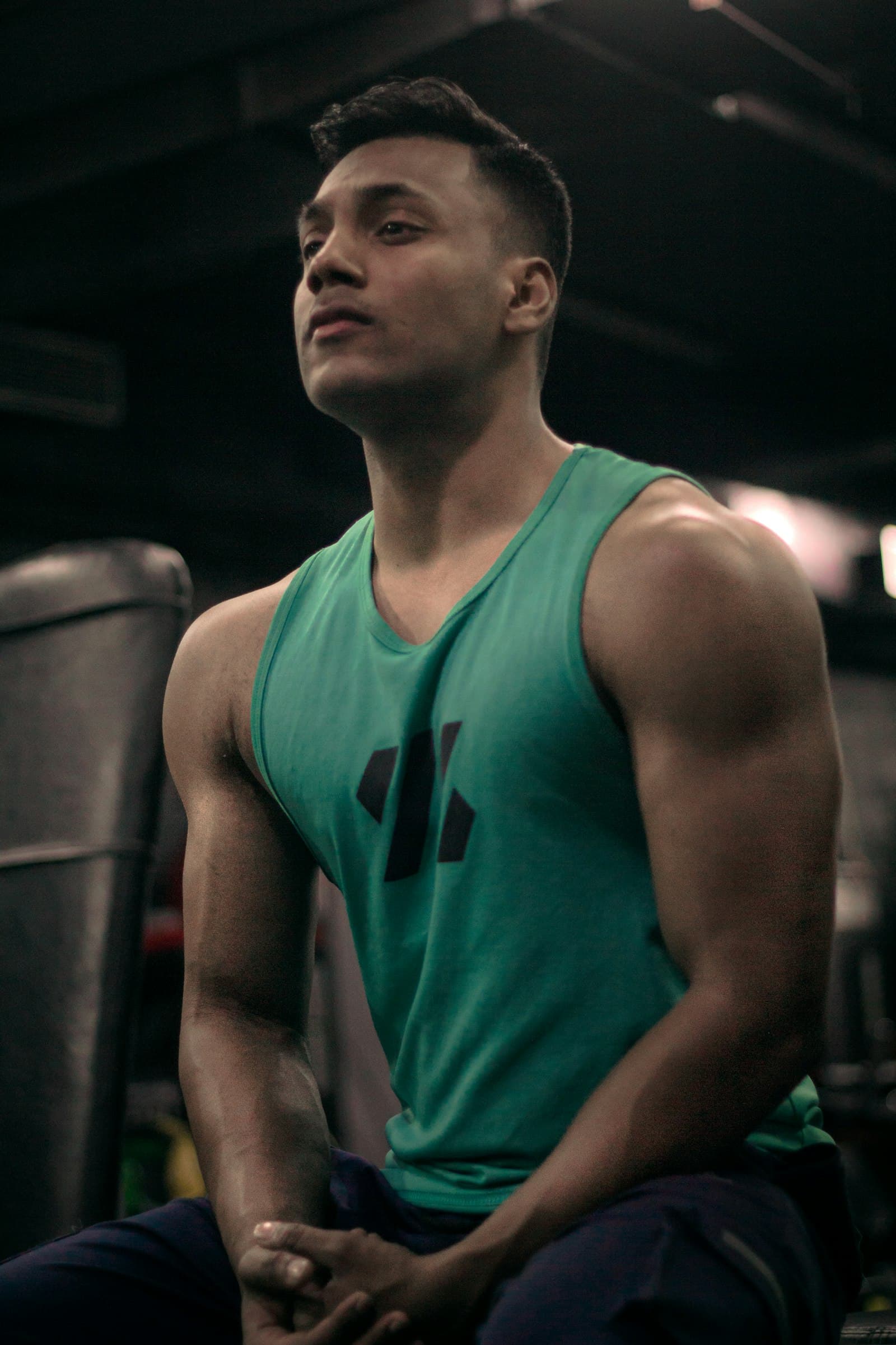
Becoming a fitness instructor: requirements and duration in Switzerland
Spending the whole day in the fitness studio, motivating people and turning your own passion for sport into a profession – for many this sounds like the absolute dream job. The fitness industry in Switzerland is growing steadily, and well-trained trainers are more in demand than ever.
But the path from enthusiastic amateur athlete to professional fitness instructor often raises questions. Do I need a sports degree? How long does the whole thing take? And what do Swiss fitness centres look for in an application?
In this blog post you will learn clearly and directly which requirements you must fulfil and how much time you should plan for your training.
What exactly does a fitness instructor do?
Before we get to the requirements, we need to briefly clarify what awaits you in this profession. As a fitness instructor (often also called a fitness trainer), you are the first point of contact on the training floor.
Your main tasks are:
- Creating individual basic training plans for new clients.
- Instructing on the strength and endurance machines.
- Correcting poor posture during training.
- Monitoring the hygiene and safety standards in the centre.
Important: In Switzerland the fitness instructor is the coach in the fitness centre. They are distinct from the personal trainer, who supports clients intensively in a 1:1 setting and often operates in self-employment.
The requirements: what you really need to bring
The good news first: you need neither a completed medical degree nor to look like a fitness model to be successful as a fitness trainer. The requirements consist of formal and personal criteria.
1. Formal and educational requirements
Access to the training is relatively low-threshold in Switzerland. Most recognised schools require the following basics:
- Minimum age: As a rule you must be at least 16 years old.
- School education: A normal school-leaving qualification (lower secondary level) is entirely sufficient. A specific vocational qualification is not strictly necessary for the basic course.
- Language skills: You should have a good command of the language of instruction (usually German, French or Italian) in speech and writing, since you have to learn complex anatomical terms and take exams.
- Emergency certificate: For successful completion and later work in the studio you need a valid BLS-AED certificate (cardiopulmonary resuscitation). You can often take this course parallel to the training. In reputable fitness trainer training courses this certificate is included.
2. Personal and physical requirements
You learn the specialist knowledge at school, but you have to bring your personality yourself.
- Own training experience: You should train regularly yourself and know the machines in the fitness studio from your own experience. Anyone who does not feel the exercises themselves cannot convey them authentically either.
- Empathy and communication skills: You work all day with people of different age groups and fitness levels. Patience, an open demeanour and the ability to listen actively are your most important tools.
- Interest in biology: You will engage intensively with anatomy (muscles, bones, joints) and physiology (cardiovascular system, metabolism). A basic interest in how the human body functions is indispensable.
Duration of the training: how much time do you need to plan?
The duration of the training to become a fitness instructor depends heavily on which learning model and which school you decide on. Since most aspiring trainers complete the training alongside their job, the courses are designed very flexibly.
As a rule the duration is between 4 and 6 months.
The Swiss market: pay attention to recognition!
In Switzerland the term "fitness instructor" is not legally protected. In theory anyone could print a diploma. However, if you want to work in a reputable fitness centre, there is no getting around the industry standards.
When choosing your school, be sure to ensure that the course is recognised by Qualicert, Qualitop or by the SVBO (Swiss Association for Educational Organisations) recognised. Only with such recognition do the studios in which you later work fulfil the requirements for health insurance recognition.
A cheap online licence from abroad will as a rule not help you on the Swiss labour market.
Conclusion: your start into an active future
The training to become a fitness instructor is the perfect entry into the health industry. The requirements are absolutely achievable for sports-enthusiastic people, and the duration of just a few months also enables working people to make a smooth lateral entry. If you enjoy working with people and are ready to acquire sound knowledge of anatomy and training theory, nothing stands in the way of your career in the fitness studio.
Frequently asked questions (FAQ) about the fitness instructor training
How much do you earn as a fitness instructor in Switzerland?
The starting salary for a permanently employed fitness instructor working full-time (100 %) is on average between CHF 4'000.- and CHF 4'500.- gross per month in Switzerland. With increasing professional experience, additional continuing education (for example to personal trainer) or the assumption of leadership tasks such as studio management, this amount can rise significantly.
Do I need a Matura or a specific vocational qualification for registration?
No, for the basic training to become a fitness instructor neither a Matura nor specific prior knowledge from a medical or sports profession is necessary. A regular school-leaving qualification at lower secondary level as well as good language skills in the respective language of instruction are entirely sufficient. That is precisely why the course is so ideal for career changers.
What career opportunities do I have after graduation?
The fitness instructor is your solid foundation. After that, countless doors open up to you in the industry. The classic further development is the training to become a personal trainer (1:1 support) or a medical fitness trainer. The highest state-recognised goal in Switzerland is the Specialist in Physical Activity and Health Promotion with federal diploma . Specialisations such as nutrition coach or group fitness instructor are also popular next steps.
Do I receive state financial support for the training?
For the pure basic course as a fitness instructor there are as a rule no direct federal funds. However, if you decide to continue the path after the instructor up to the federal diploma, the subject-oriented funding of the Confederation (SERI) applies. In this case you can reclaim up to 50 percent of the eligible course costs from the state retroactively.
When do I have to present the emergency certificate (BLS-AED)?
A valid BLS-AED certificate (Basic Life Support and handling of the defibrillator) is a mandatory requirement for the health insurance recognition (Qualicert/Qualitop) of your future employer. At most schools you have to present this proof at the latest on the day of your final diploma exam. Many training institutes offer these courses, which usually last only half a day, directly as a convenient additional module.
Is a foreign qualification valid in Switzerland?
Here absolute caution is advised. A pure A or B licence from abroad (for example from Germany or Austria) is not accepted by many Swiss fitness centres, as it does not meet the requirements of the Swiss health insurers. If you want to work in Switzerland, you should definitely choose a school that is certified according to the Swiss industry standards (SVBO, Qualicert) certified.