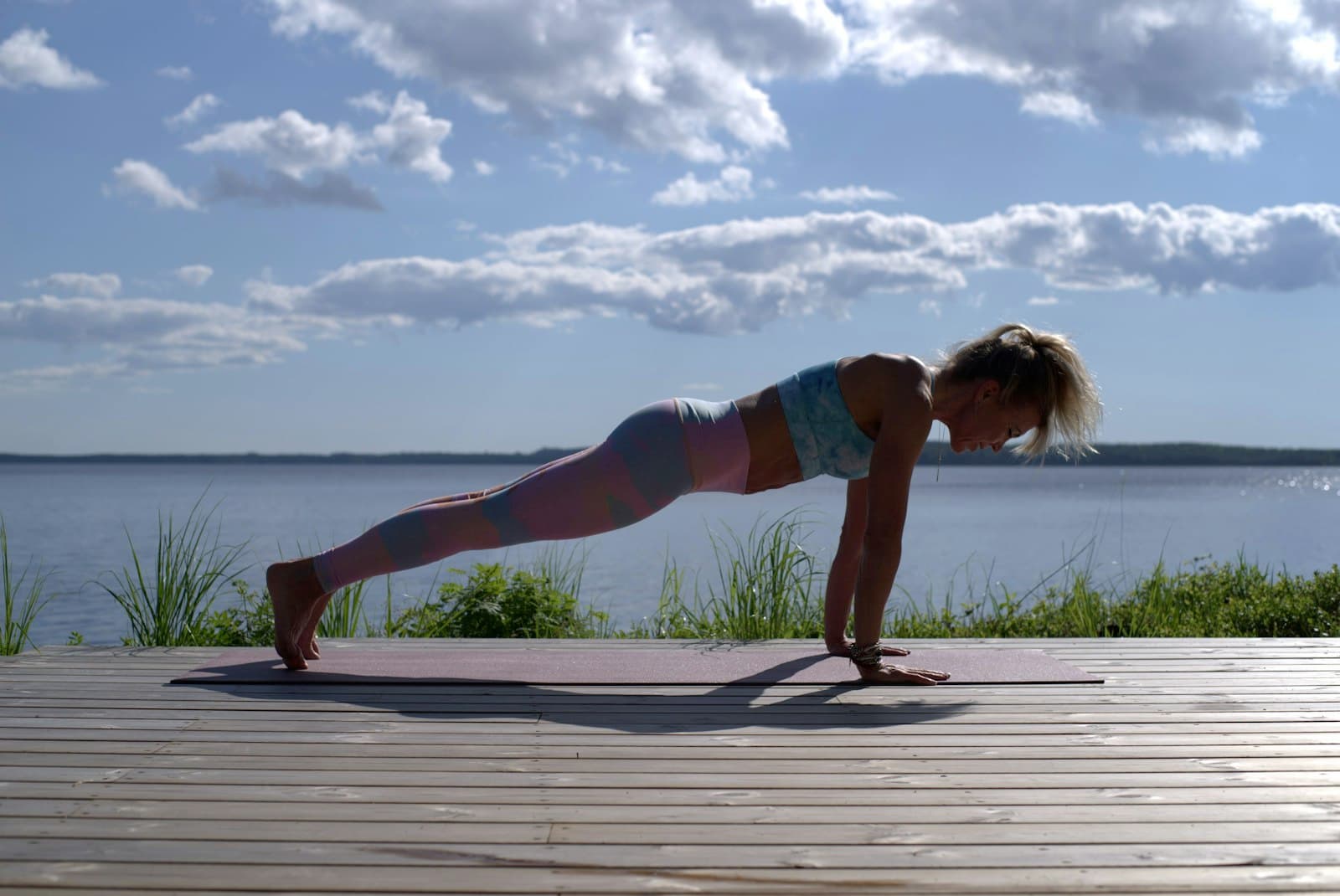
Strength training for children – a topic full of myths
“It stunts their growth.” “It harms the joints.” “Children should only play, not train.”
Such claims are persistent. Yet today's sports science agrees on one point: strength training in childhood and adolescence is safe, sensible and healthy – when it is carried out in an age-appropriate way.
What matters, then, is not whether, but how you train.
What strength training really achieves in childhood and adolescence
Properly structured strength training develops far more than just muscular strength in children and adolescents. It supports:
- healthy physical development
- bone stability
- the load-bearing capacity of joints and tendons
- coordination and body control
- posture
- as well as confidence in one's own body
Especially important: strength training improves the ability to control force safely. This reduces the risk of injury not only in sport, but also in everyday life.
Strength training is not bodybuilding
One key point is often misunderstood:
strength training in childhood and adolescence does not mean heavy weightlifting or muscle building in bodybuilding style.
The focus is rather on:
- clean movement patterns
- body control
- playful forms of loading
- functional strength development
- stability and coordination
Precisely at an age when growth, motor development and the nervous system are still maturing strongly, this form of training is particularly valuable.

Would you also like to turn your hobby into a profession?
Discover the various training programmes of the update Akademie and qualify as a fitness trainer!
Is strength training safe for children?
Yes – when it is properly guided.
Modern training concepts rely on:
- age-appropriate loading (based on the stage of development, not on the maximum weight)
- clean technique instead of uncontrolled maximum loads
- controlled progression without maximum-strength tests
Injuries do not arise from strength training itself, but from:
- lack of supervision
- incorrect technique
- excessive loads
- performance pressure instead of movement competence
Under expert guidance, strength training is no more dangerous than other sports – often even safer.
It is often overlooked that children regularly expose themselves in everyday life and play to considerably higher physical loads than in guided strength training – for example when carrying a friend on their back, roughhousing or climbing. These loads are usually unstructured, take place without conscious technique or posture, and are nevertheless perceived as “normal”. By comparison, well-supervised strength training is more clearly dosed, technically accompanied and therefore often even safer.
Why strength training is so valuable precisely during adolescence
Adolescence is a phase of major physical changes:
- growth spurts
- hormonal shifts
- changing proportions
- new athletic demands
This is exactly where strength training helps to restabilise the body, to control movements and to avoid overloading.
Moreover, it becomes clear that children and adolescents who learn early to deal consciously with their body often develop a healthier relationship with movement, performance and effort – including in adulthood.
Strength training and psychological development
Strength training does not only have a physical effect. Many adolescents also benefit mentally:
- strengthened self-efficacy and self-confidence
- improved body awareness and movement confidence
- positive performance feedback and realistic experiences of success
- better stress management as well as the development of self-discipline
Precisely in a phase in which insecurity, performance pressure and comparisons increase, well-supported training can be a stabilising factor.
What really matters in training children and adolescents
For sensible strength training in childhood and adolescence, clear basic principles apply:
- technique before weight
- quality before quantity
- development before comparison
- safety before performance
- enjoyment before compulsion
Strength training should not create overload, but promote competence, confidence and movement assurance.

Become a fitness trainer
Turn your passion into a career!
Explore the diverse training programmes of the update Akademie and qualify as a fitness trainer!
Protection against false role models and unhealthy pressure
Strength training in childhood and adolescence is sensible and safe when it is oriented towards development, health and load capacity – not towards external ideals. This is precisely where potential risk factors also become apparent in practice.
Through social media, many children and adolescents today come into contact very early with:
- extreme body images
- supposedly perfect training results
- quick before-and-after promises
This can lead to training no longer being understood as a long-term or lifelong developmental process, but as a short-term optimisation project.
It becomes problematic above all when:
- the desire for quick results prevails
- training is linked to constant comparisons
- or when parents, trainers or reference persons uncritically use or recommend supplements and performance-influencing products.
That is exactly why safety in strength training involves not only the right choice of exercises, but also a conscious handling of expectations, role models and external pressure. Sustainable development does not come from acceleration, but from controlled loading, time and the professional guidance of an experienced, trustworthy specialist.
Conclusion: strength training in childhood and adolescence is an investment in the future
Strength training in childhood and adolescence is not a risk, but a valuable resource for healthy physical and mental development.
Properly structured, it promotes:
- resilient bones and stable joint structures
- clean movement patterns as well as coordinative and neural development
- a positive body awareness, self-confidence and ability to concentrate
- a healthy regulation of stress and hormones
- long-lasting enjoyment of movement and physical self-competence
It is not early specialisation or maximum performance that takes centre stage, but controlled strength development, coordination and age-appropriate loading.
Strong children do not become strong through heavy weights – but through good, professional guidance.