As soon as the days get shorter, you hear the same sentence in every changing room: «I hope it doesn't get me this year.» Right on cue, the shelves fill up with effervescent tablets and immune shots. The honest answer is less spectacular: an immune system cannot be powered up at the push of a button. It does, however, respond very much to what you do regularly – to movement, to how much energy you take in, to sleep and to how you handle stress. This article sets out what training and nutrition change about your defences. It is about prevention before the cold season – what applies once it has already got you is a separate question.
Movement: the basic effect is positive
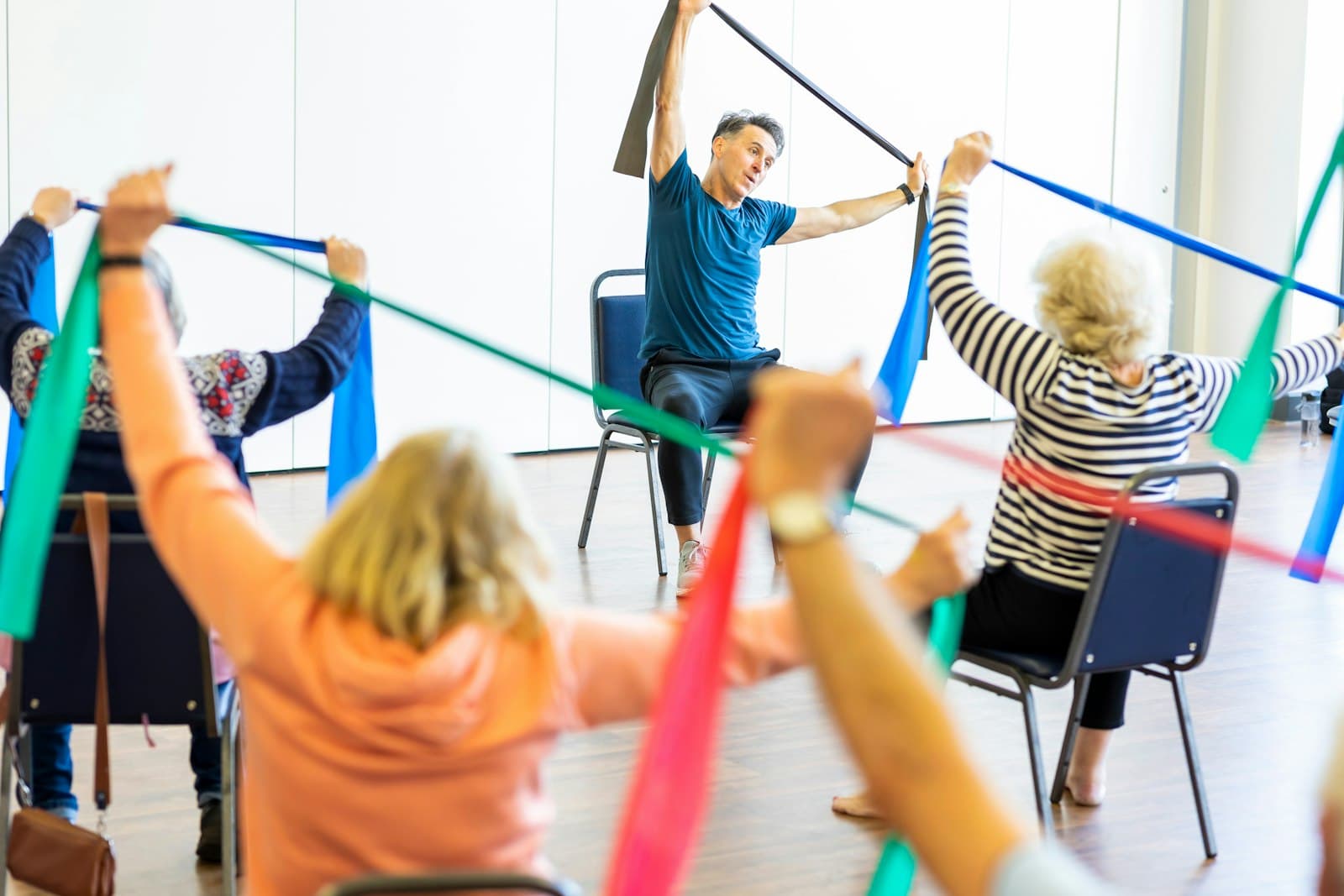
In the academy's training theory, the benefit of endurance training is stated without hedging: it raises performance capacity, shortens recovery time, improves wellbeing, prevents cardiovascular and lifestyle diseases and strengthens the immune system. It is expressly unimportant which form of movement is used to load the cardiovascular system – bike, cross trainer or a class session lead to the same goal, provided you train regularly, for long enough and at a suitable intensity.
This last condition contains the rest of the article: the protective effect depends on regularity and on an intensity you can handle. For the greater part of your volume, that is the easy range in which the peripheral adaptations arise – more on this in the article on base endurance training.
The «open window» after hard sessions
The positive basic effect has a flip side, and it is clearly named in the course. Intense physical loads lead to a temporary change in the body's ability to defend itself against pathogens. This phase is referred to as the «open window»: afterwards you are more susceptible to infections, particularly of the upper respiratory tract.
The mechanism runs via the stress hormones: particularly intense loads lead, through their release, to a weakening of the immune system, which makes you susceptible to infection. That is not an argument against hard training but one for dosing it – a single intense session opens the window briefly, a series of them without recovery holds it open. How load and stress burden interact is described in the article on the stress hormone cortisol.
Carbohydrates: the best-evidenced lever
Here the answer is surprising, because it is not «vitamin C». In the course, the most effective nutritional measure for protecting the immune system after exercise is considered to be an adequate carbohydrate intake during and after exercise. Carbohydrates have a protective effect because they dampen the exercise-induced rise in stress hormones.
Two concrete consequences follow from this:
- No fasted training during high-intensity phases. Training with low glycogen stores («train low») has its place, but in order to protect the immune system and health, such sessions should not take place during high-intensity training phases. What the approach can and cannot do is described in the article Training fasted.
- Do not come up empty after hard sessions. The time immediately after training is important for recovery and the immune system. If a main meal does not follow within around 60 minutes, a recovery meal belongs in the picture. The article on recovery in training provides the context.
The course expressly points out that carbohydrates during exercise count particularly when environmental factors such as cold are added to the mix.
Too little energy is a bigger problem than too few vitamins
One state reliably weakens your defences: chronically low energy availability, defined as energy intake minus energy expenditure in training. If it stays low over time, the risk of fatigue and overtraining symptoms rises, the immune system is weakened, and in women menstrual cycle disturbances as well as reduced bone density can be added. The increased risk of infection appears expressly in the list of RED-S symptoms.
In practice that means: anyone who in autumn simultaneously ramps up their training load and cuts down their calories is working against their own defences. Even when losing weight, the recommendation therefore applies to make sure of an adequate nutrient intake after exercise and to place the next main meal close to the end of training rather than leaving it out.
The same applies to protein. If the protein supply is inadequate in quantity or quality, physical and mental performance capacity declines first; an impairment of the immune system follows, with an increased susceptibility to infectious diseases. The requirement in sport is 1.3 to 1.8 g per kilogram of body weight.
Which nutrients are demonstrably involved
Vitamins influence numerous processes in metabolism, and the immune system is named first among them in the course documents – alongside energy metabolism, cell growth, the nervous system and blood clotting. There is a concrete statement about secondary plant compounds too: some carotenoids such as beta-carotene can stimulate the immune system. Beta-carotene is found in carrots, pumpkin, red peppers, tomatoes and apricots as well as in green vegetables such as broccoli or spinach.
What is decisive, however, is what the course does not derive from this. No intake recommendations can be given for individual secondary plant compounds, because the positive effect apparently depends on several substances occurring together, as they do in a food. What is recommended is therefore simply a high consumption of vegetables and fruit, including pulses, nuts and wholegrain products. That is precisely why there is no miracle cure: the effect lies in the pattern, not in the capsule. What remains of the supposed exceptions is sorted out in the article on superfoods.
For micronutrients as a whole, the core statement of sports nutrition applies: it is assumed that even in sport a healthy and varied diet supplies enough vitamins and minerals, as long as energy requirements are covered. At the upper end there is also a safe range between the minimum required and the maximum tolerable dose – high-dose preparations can exceed it. One justified exception is the supply situation in the dark half of the year, which the article on vitamin D covers.
Sleep, recovery and the boundary with overtraining
Recovery is not a soft factor. With overreaching – the short-term drop in performance – tiredness, reluctance and low mood are part of the picture; the treatment of choice is less volume and intensity along with better recovery measures. If these early symptoms are ignored, overtraining syndrome can develop from it, whose early stage is recognisable among other things by training fatigue, mood swings, sleep problems and appetite disturbances. Here you have to reckon with six to eight weeks without training. Anyone who gets ill more often in autumn than usual should therefore not change their supplement first but check how they are managing load. The article on sleep shows the effective levers for the night, and anyone who repeatedly runs into the same limit will find the plannable answer in deload weeks.
And if it gets you anyway?
Then prevention ends and a different decision begins. With fever, aching limbs or a strong feeling of illness, training should be paused, and the return happens in stages. Why this is not a question of discipline but of risk is set out in detail in the article Training with flu. With persistent fever, shortness of breath, heart palpitations or complaints that do not improve over several days, a medical assessment is the right next step – not an earlier return to training.
Course tip from update Akademie: Do you want to understand how movement, nutrition, recovery and stress interact instead of collecting individual tips? The Gesundheitstrainer SVBO programme at update Akademie covers health promotion, training management and counselling as a connected whole – with the aim of testing claims against the evidence.
Frequently asked questions about the immune system
Does sport strengthen the immune system or weaken it?
Both, depending on the dose. Regular endurance training is expressly described in training theory as strengthening the immune system. Particularly intense loads, by contrast, lead through the release of stress hormones to a temporary weakening – the so-called «open window», in which susceptibility to upper respiratory tract infections rises.
Which nutritional measure best protects the immune system after training?
An adequate carbohydrate intake during and after exercise is considered the most effective nutritional measure for protecting the immune system after exercise. If a main meal does not follow within around 60 minutes, a recovery meal is appropriate.
May I train fasted during the cold season?
Not during high-intensity training phases. In order to protect the immune system and health, sessions with low carbohydrate stores should not be placed in such phases. In quieter phases fasted training is possible, but it provides no benefit of its own for your defences.
Do vitamin supplements achieve anything in autumn?
It is assumed that a healthy and varied diet supplies enough vitamins and minerals even in sport, as long as energy requirements are covered. There is also only a limited safe range between the minimum required and the maximum tolerable dose, which high-dose preparations can exceed.
Why do I get ill more often during intense training phases?
Typically two reasons come together: the exercise-induced release of stress hormones and too low an energy availability. The latter increases the risk of fatigue and overtraining symptoms and weakens the immune system; an increased risk of infection is one of the typical symptoms. If infections become frequent, that should be investigated medically.
Conclusion
The immune system does not follow any shortcut. Regular endurance training has a protective effect, very hard sessions briefly open a window for infections, and the best-evidenced nutritional lever is unglamorous: enough carbohydrates during and after exercise, no fasted sessions during high-intensity phases and an energy intake that covers expenditure. Vitamins, minerals and secondary plant compounds are involved, but they unfold their effect in the pattern of a varied diet and not in the individual capsule. Anyone who wants to get through autumn well should first get sleep, recovery and how much they eat right – and pause consistently if it gets them anyway.