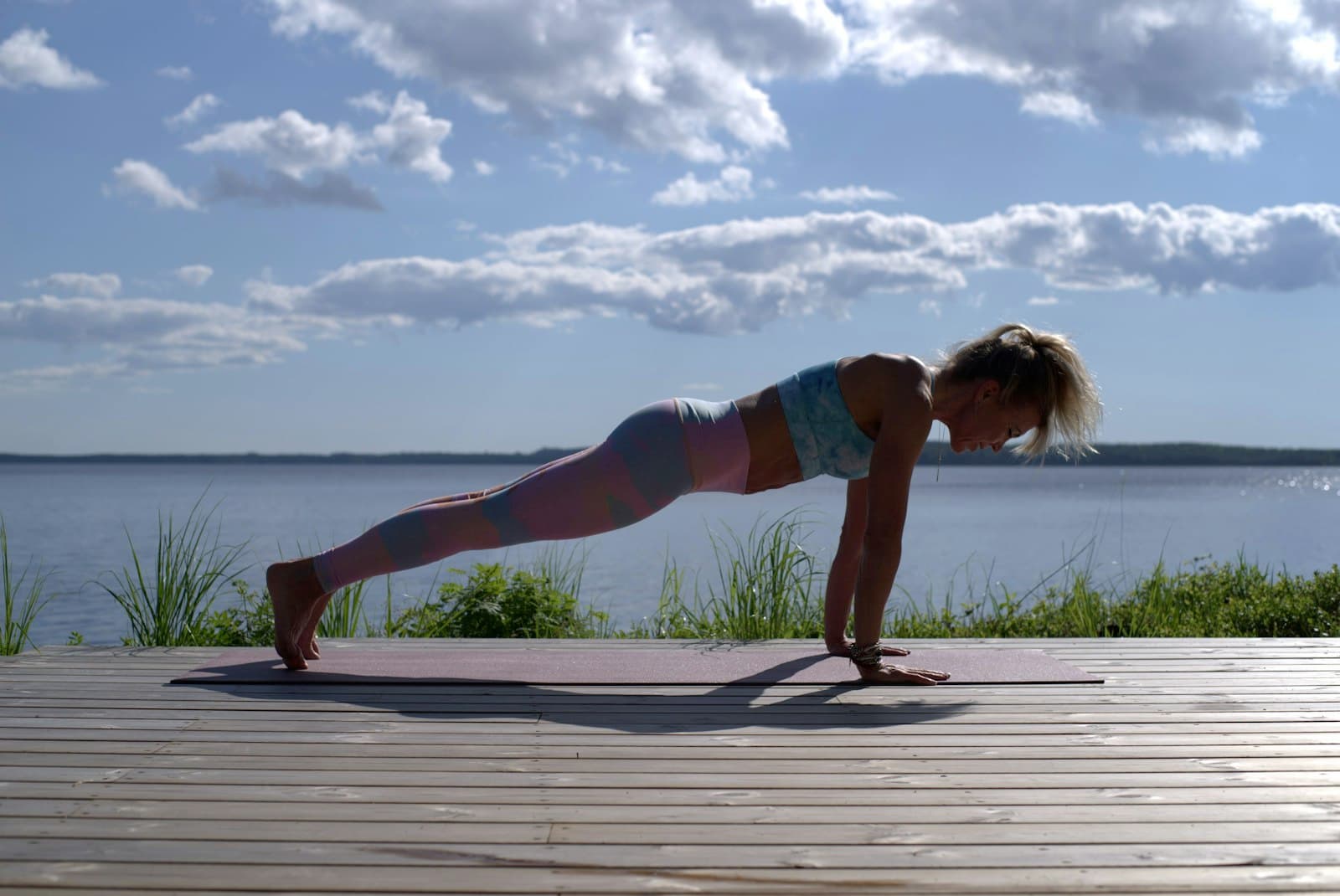
Many people would like to become more physically active, but fail at one central point: the lack of time. Between job, family and everyday life, there is often barely an hour to spare – is a short workout even worth it? The answer is clear: yes. But only if you go about it sensibly.
In this article you will learn how to train effectively with little time, which training methods are especially suitable for this, and what science has to say about it.
Little time = little effect? A widespread misconception
The notion that training is only effective if it lasts a long time is outdated. Studies show: even short but targeted training sessions can have a variety of positive effects – from improved metabolism through strength gains to increased endurance. What is decisive is not the duration, but the quality and structure of the training.
What can be achieved in a short time?
Even with 2–4 sessions per week of 15–30 minutes, you can:
- increase your strength (e.g. with full-body exercises or “Circuittraining»),
- improve your endurance (e.g. with interval training),
- maintain or develop your mobility and coordination,
- influence your health positively in the long term.
Especially for beginners and those returning to exercise, short, regular training is often more effective than infrequent long sessions with a high load.
The best methods for little time
These forms of training are especially well suited when you have little time:
HIIT (High Intensity Interval Training) – a lot of effect in a short time: In HIIT, short, intense loading phases (e.g. 30 seconds of sprinting or burpees and other full-body movements) alternate with short breaks (e.g. 15–30 seconds) for sets of 4 minutes (2–3 minutes of rest in between).
A typical HIIT lasts only 10–20 minutes, but gets the circulation going, improves endurance and can keep the metabolism active for hours. Ideal for everyone who has little time and yet wants to achieve a lot.
Strength circuit / Circuittraining – strength and endurance combined: In Circuittraining you complete several exercises one after another – usually for the whole body. These can be, for example, squats, push-ups, core exercises and rowing. Between the stations there are only short breaks or none at all.
This format not only increases your muscle strength but at the same time improves cardiovascular performance – particularly in beginners. Especially popular: a circuit with 6–10 exercises, 2–3 rounds, 30–60 seconds per exercise.
Slow single-set training – maximum tension at minimal volume: With this method you perform only a single set per exercise – but it has it in it: the weight is moved 6–10 times in a very controlled way, at a tempo of 3–3–2–2 (concentric – isometric shortened – eccentric – isometric stretched). Each repetition thus lasts around 10 seconds and the entire set 60–100 seconds – full muscle tension guaranteed. The goal: you only end the set when you can no longer perform the movement cleanly over the full range of motion – that is, at true muscle failure. Typical for the start are 5–8 basic exercises that target large muscle groups (e.g. squats or leg press, pull-ups or lat pulldown, rowing, bench press or chest press). The training lasts only a short time (approx. 20 minutes), but is intense and effective – ideal for advanced trainees or anyone who wants to set targeted stimuli with little time investment.
EMOM & AMRAP – functional short formats with structure: These training methods provide clear sequences and playful goals in a short time:
- EMOM (Every Minute On the Minute): at the start of each minute you perform a particular exercise or number of repetitions – e.g. 10 squats. Whatever remains of the minute is your break. Then the next minute begins with the same exercise or (to train your whole body in a balanced way) a new exercise, e.g. for the upper body.
- AMRAP (As Many Rounds/Reps As Possible): you try, within a set time (e.g. 10 minutes), to complete as many rounds or repetitions as possible of a particular exercise circuit (like the one described under Circuittraining) – at your own pace, but continuously.
Both formats are short, intense and motivating – perfect for everyone who values a clear structure and variety.
“Snackable workouts”: several times a day, 5–10 minutes of movement, e.g. a few mobilisation exercises in the morning, a mini-workout at midday, a bit of stretching in the evening.

Would you also like to turn your hobby into a profession?
Discover the various training programmes of the update Akademie and qualify as a fitness trainer!
Scientifically proven: short-term training works
Meta-analyses and intervention studies show that short, intense training:
- cardiovascular health (also in risk groups),
- blood sugar and lipid values favourably,
- muscle – provided the training is targeted,
- and increases general well-being.
Even a 7-minute workout per day showed measurable improvements in fitness and energy levels among office workers in studies.
Common mistakes:
what should be avoided with short sessions Even if the training lasts only 10 or 20 minutes – a few pitfalls can significantly diminish the effect:
- Lack of structure: spontaneous trial and error achieves little – even short workouts need a clear plan and a goal. • No progression: progress only arises through targeted increase – e.g. more repetitions, shorter breaks, a more intense tempo or a more demanding exercise level. • Underestimated recovery: short sessions only work if you also grant your body breaks – sleep, recovery and easy days are part of it. • Poor technique: whoever performs exercises too quickly or sloppily risks overload or injury – especially when time is short, one tends to just “push through”. • Too little intensity: “short” does not mean “half-hearted” – for HIIT, EMOM or Tabata to be effective, they require effort and concentration. • Only one form of training: variety is important – whoever always does only the same type of training eventually no longer stimulates the body properly.
Conclusion: short training – big effect
Little time is no reason to give up on movement. On the contrary: whoever organises themselves cleverly can achieve a lot with little effort.
Our tip: start with two short sessions per week – and observe what changes in your everyday life and your body.