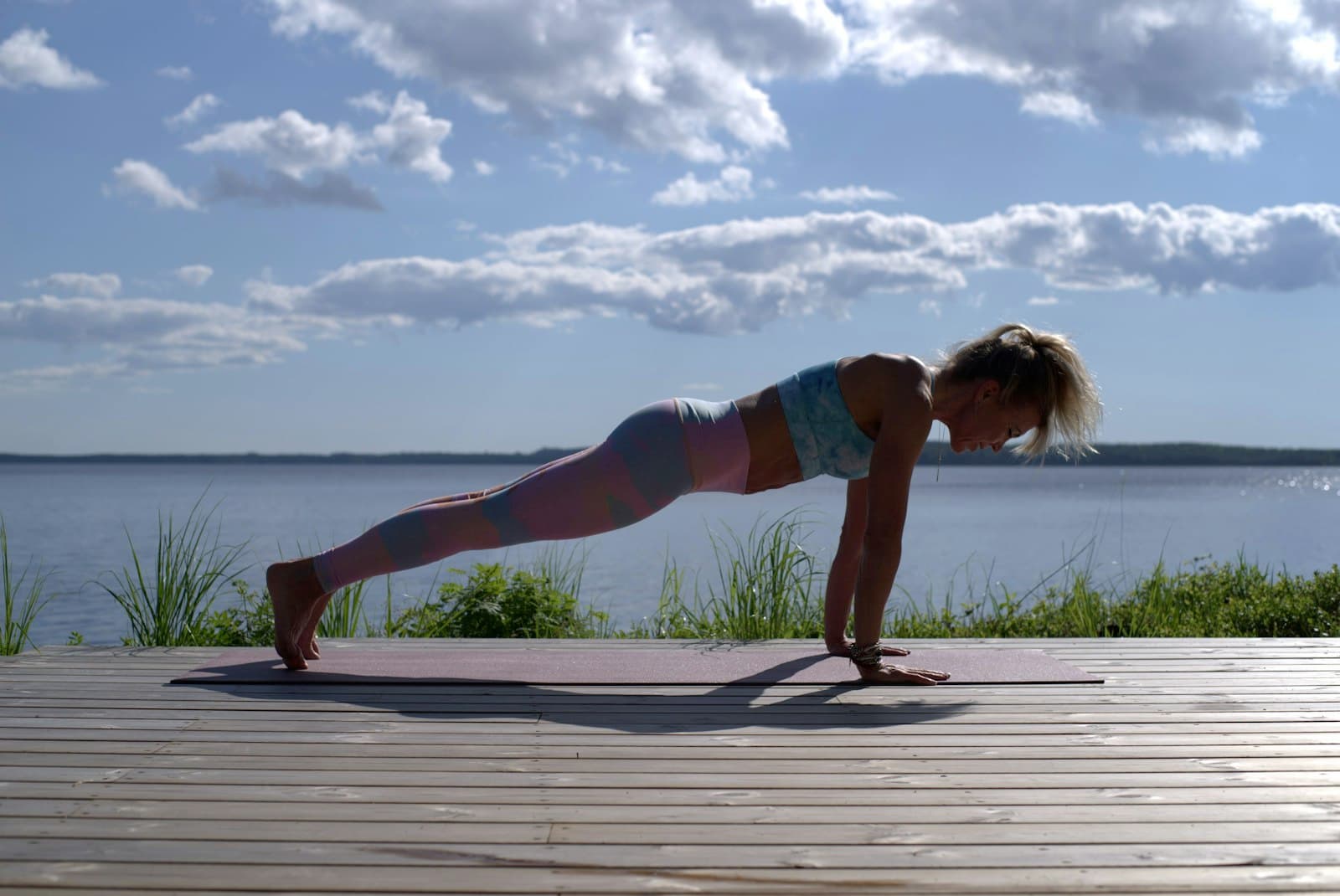
In Switzerland, back pain is among the most common health complaints of all and has been steadily increasing in recent years.
For many of those affected, the same question arises sooner or later: should you stretch the back or strengthen it?
The answer is more complex than it is often made out to be. Because back pain rarely stems from just a single factor. Nor is there one single exercise or method that works equally well for everyone.
Back pain is not always “non-specific”
In medicine, a distinction is often made between specific and non-specific back pain.
Specific back pain has a clearly identifiable cause, for example:
- herniated discs
- nerve irritation or sciatica problems
- spinal canal stenosis
- osteoarthritis of the facet joints
- inflammatory diseases
- vertebral slippage (spondylolisthesis)
- fractures or injuries
- muscle or fascia injuries
Complaints for which no clear cause is found are considered “non-specific.”
It is precisely this term, however, that is viewed critically by various experts and scientists. One of the best-known proponents of this view is Dr. Stuart McGill. He takes the position that many so-called “non-specific back pain” cases are not truly non-specific, but are merely examined with assessments that are too superficial.
In fact, many examinations focus mainly on imaging procedures such as MRI or X-rays. These, however, do not always show how a person moves, bears load, breathes or behaves in everyday life, and they in turn also depend on the experience and competence of the person reading these images.
The causes of back pain therefore often lie in:
- unfavourable movement patterns
- persistent muscular tension
- a lack of stability
- poor load distribution
- lack of movement
- chronic stress
- unfavourable breathing patterns
- a lack of body awareness
- repeated incorrect loading in everyday life
So the fact that no “specific back pain” could be identified does not mean that the pain is “imagined.”
“The pain is purely psychological” – usually too simplistic
With back pain, it is sometimes quickly claimed that the complaints are “psychological” or “all in your head.” In most cases, this statement falls far short.
Psychological factors can certainly influence pain. Stress, being overwhelmed, anxiety or chronic tension can, for example, cause the musculature to remain permanently under tension. Breathing, too, often changes under stress – many people breathe shallowly and in a permanently tense way.
This can in turn:
- alter movement patterns
- load joints unfavourably
- tire muscles more quickly
- create protective tension
But that does not mean the pain is imagined, nor is it merely a psychological cause, because there are also further steps in between that led to the pain. Rather, the body, the nervous system and the psyche influence one another.
A good specialist therefore does not only perceive images or individual muscles, but the whole person.

Would you like to turn your hobby into a career too?
Discover the various training programmes of the update Akademie and qualify as a fitness trainer!
Does the spine really need more mobility?
Many people automatically respond to back pain with stretching exercises for the spine. This can feel pleasant in the short term, but does not always resolve the actual cause.
Interestingly, in many cases the spine appears to need less extreme mobility than good stability and controlled load capacity.
More often, it is the adjacent structures that are restricted, for example:
- the hip flexors
- the gluteal musculature
- the thoracic spine
- the shoulder girdle
When these areas are immobile or weak, the spine often has to compensate. This creates unfavourable loading.
A classic example is shortened or tense hip flexors due to prolonged sitting. These can change the position of the pelvis, which in turn changes the posture of the lumbar spine.
The problem then does not lie primarily in the back itself.
Strength training helps – but not always the way many people think
With back pain, classic strength training is often recommended straight away. In principle, training can be very useful. What is decisive, however, is the type of training.
In everyday life, the spine rarely needs maximal strength output or movements such as crunches. Much more important is usually the ability to work stably and in a controlled way over a longer period and to maintain body posture.
That is why the strength endurance of the trunk musculature in particular plays an important role.
The goal is not:
- the hardest possible abdominal exercises
- permanent tensing of the trunk
- training up to the pain threshold
but rather:
- controlled stability
- efficient movement patterns
- good load distribution
- economical posture
- coordinated muscle work
Many people tense their abdomen or back too strongly on a permanent basis – often even unconsciously. This too can intensify complaints.
The spine often appears to benefit from a calm, controlled and enduring stabilisation system rather than from maximal tension. That is also why calm and controlled breathing patterns are often very helpful against back pain.

Become a fitness trainer
Turn your passion into a career!
Explore the wide-ranging training programmes of the update Akademie and qualify as a fitness trainer!
Not simply “training through the pain”
With back pain, you often hear statements like: “You just have to get stronger” or “You have to push through it.”
That can be problematic. Of course, pain does not automatically mean harm. Nevertheless, complaints should be taken seriously – especially when exercises significantly worsen the pain.
It is often more sensible to:
- build up pain-free movement patterns
- develop resilient everyday habits
- change positions regularly
- integrate controlled movement into everyday life
- perceive your body better
Many of those affected benefit more from adapting their everyday life than from constantly searching for new exercises.
What is often sensible with back pain
Depending on the cause, different approaches can be helpful:
Improve mobility
Especially in the case of:
- a restricted hip
- a stiff thoracic spine
- restricted shoulder mobility
- prolonged sitting
Train stability and strength endurance
Especially in the case of:
- recurring complaints
- a lack of load capacity
- rapid fatigue
- unstable movement patterns
Change everyday behaviour
For example:
- change your sitting position more often
- take regular movement breaks
- better lifting and carrying techniques
- calmer, deeper and more conscious breathing
- less permanent body tension
Take stress and strain into account
Chronic stress influences:
- muscle tension
- sleep quality
- recovery
- pain perception
Finding a good specialist
Especially with longer-standing back pain, it is often worthwhile to look for a specialist who takes the time and works on an individual basis.
What often matters here is less a single method than rather:
- precise observation
- careful analysis
- listening
- understandable explanations
- a step-by-step build-up of load
It usually becomes problematic when those affected are given blanket exercises that even intensify their complaints.
Your own body often provides important clues as to what does you good and what does not.
Conclusion
The question “stretching or strength training?” cannot be answered in a blanket way when it comes to back pain.
Many people need:
- more mobility in the hips and shoulders,
- better stability and strength endurance in the trunk,
- more efficient posture and movement patterns
- and less permanent tension.
The spine often appears to need less extreme mobility than a stable, coordinated and load-bearing environment.
What is decisive here is rarely a single exercise. Far more important in the long term are pain-free habits, appropriate loading and a better understanding of your own body.
With persistent complaints, it is therefore worthwhile to seek professional support – ideally from someone who does not only look at images, but perceives the whole person.